
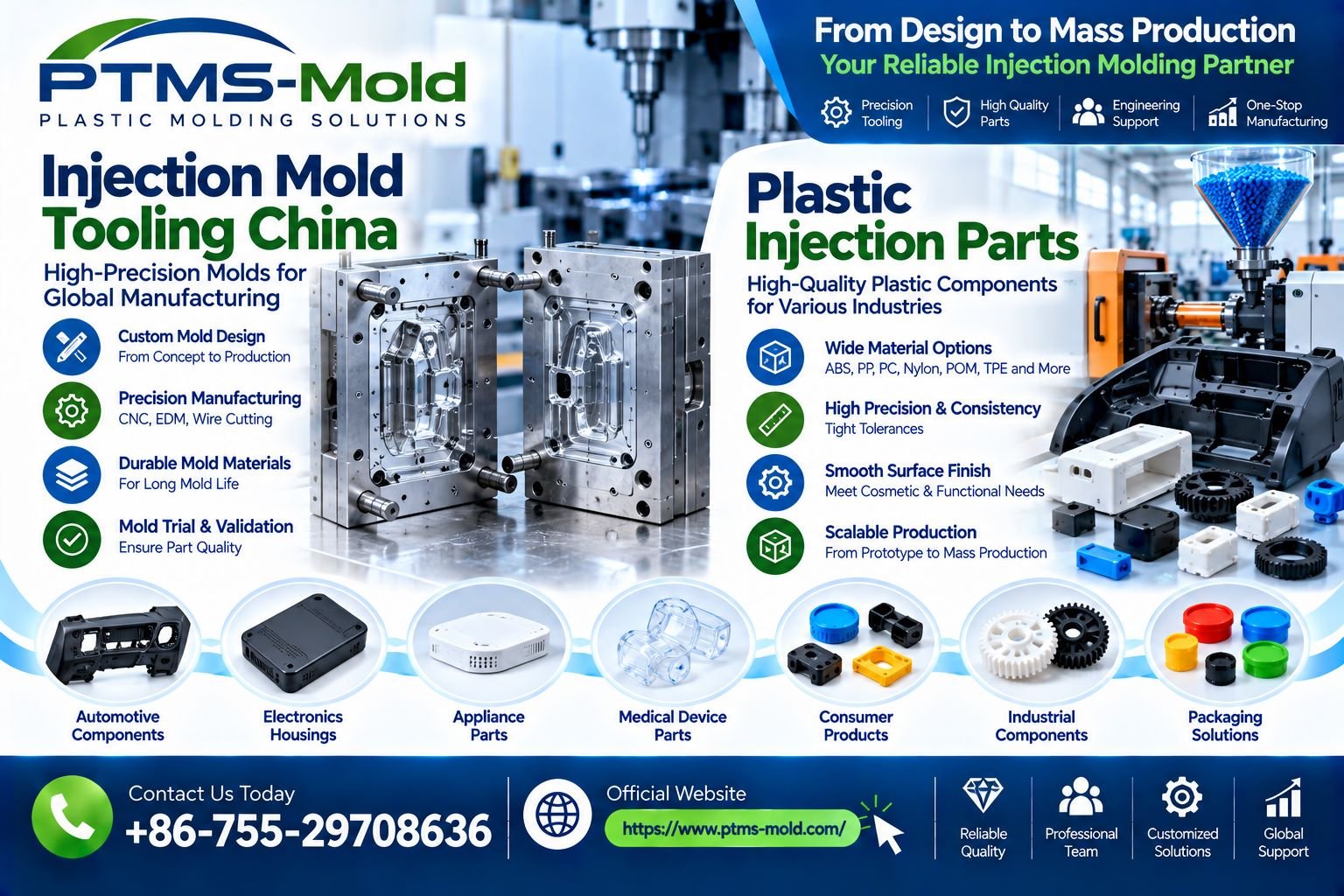
Understanding how mold venting influences product quality can help manufacturers reduce avoidable defects, improve process consistency, and support dependable component production.
The plastic manufacturing industry is paying greater attention to an often-overlooked aspect of injection molding: removing trapped air and gases from mold cavities during production.
While manufacturers traditionally focus on mold accuracy, material selection, and production efficiency, effective venting is equally important for producing consistent, high-quality plastic components.
Injection Mold Tooling China offers sourcing opportunities for manufacturers seeking precision molds with appropriate cavity ventilation, flow-path engineering, and production reliability.
Meanwhile, Plastic Injection Parts used in automotive systems, electronics, household appliances, and industrial equipment can be affected by inadequate gas evacuation during molding.
Why Mold Venting Deserves Greater Attention
During injection molding, molten plastic enters a mold cavity that initially contains air.
As the plastic advances, this air must escape through suitable venting arrangements.
If gases become trapped, they may interfere with complete cavity filling or create defects in finished components.
Poor venting can contribute to burn marks, incomplete filling, and inconsistent surface quality.
These problems may lead to rejected parts and unnecessary production adjustments.
Venting should therefore be considered during initial mold design instead of being treated only as a troubleshooting measure.
Understanding Injection Mold Tooling China
Injection Mold Tooling China refers to injection mold design, engineering, and manufacturing services provided by suppliers operating in China.
Depending on supplier capabilities, these services may include CNC machining, electrical discharge machining, mold-flow analysis, precision assembly, and production testing.
Developing reliable tooling requires careful coordination between cavity geometry, gate placement, cooling arrangements, and venting features.
International buyers should communicate detailed component specifications and manufacturing expectations before approving tooling development.
For demanding plastic components, mold ventilation requirements can form part of the engineering review.
How Plastic Injection Parts Are Affected by Trapped Gas
Plastic Injection Parts are manufactured by injecting molten thermoplastic material into a prepared mold cavity.
During filling, displaced air and gases generated under processing conditions must escape appropriately.
When gas becomes trapped, localised pressure or overheating may affect the finished component.
Possible results include:
- Burn Marks: Darkened areas caused by excessive localised heating.
- Short Shots: Incomplete filling of the intended component geometry.
- Surface Imperfections: Visible defects associated with unstable filling conditions.
- Weak Weld Regions: Areas where meeting melt fronts may produce reduced mechanical performance.
However, these defects can have multiple causes. Manufacturers should investigate the actual problem before modifying tooling.
How Mold Venting Systems Work
Mold venting systems provide controlled escape paths for air and gases during cavity filling.
These paths may include small vent channels positioned along suitable parting surfaces or other engineered locations.
The vent dimensions must allow gases to escape without permitting unacceptable plastic leakage.
Excessively large openings may contribute to flash, while insufficient venting can restrict air evacuation.
The appropriate arrangement depends on the polymer, component geometry, and molding conditions.
This makes accurate tooling design and machining essential.
Why Gate Placement Influences Airflow
A mold gate controls where molten plastic enters the cavity.
Its location influences the direction of material flow and the areas where air may become trapped.
Complex products may contain ribs, thin walls, or internal features that complicate filling behaviour.
If different melt fronts meet before displaced air escapes, gas pockets can develop.
Engineers may use appropriate simulation tools to assess flow patterns and identify possible venting locations.
However, simulation results should be checked against actual molding trials.
Gate placement and ventilation must be evaluated together.
Comparing Common Venting Approaches
| Venting Approach | Main Function | Important Consideration |
| Parting-Line Vents | Release gases through suitable parting surfaces | Accurate vent dimensions |
| Venting Through Suitable Inserts | Provide additional gas escape paths | Insert fit and maintenance |
| Ejector-Related Venting | Allow controlled gas escape around selected features | Clearance and functionality |
| Vacuum-Assisted Venting | Remove gases through an engineered vacuum arrangement | Equipment complexity and timing |
| Porous Venting Components | Allow gas movement through specialised materials | Material compatibility and maintenance |
Each approach has limitations and should be selected according to the mold design.
The Role of Material Selection
Different thermoplastic materials behave differently during injection molding.
ABS, polypropylene, polycarbonate, and engineering nylons have varying viscosity, temperature, and processing characteristics.
Some materials may be more sensitive to moisture or thermal degradation.
These characteristics can influence gas formation and the overall filling process.
Manufacturers should verify drying requirements, processing temperatures, and material specifications.
A venting system cannot compensate for every material-related processing problem.
Reliable production requires suitable materials and correctly configured equipment.
Why Mold Maintenance Matters
Venting channels may become restricted by deposits or contamination during production.
When this occurs, previously acceptable components may begin displaying defects.
Maintenance procedures should include appropriate inspection and cleaning of relevant venting areas.
However, aggressive cleaning or unauthorised machining can damage precision surfaces.
Manufacturers should follow established maintenance instructions and preserve approved vent dimensions.
Monitoring recurring defects can help identify when inspection is necessary.
Preventive maintenance supports stable production without relying exclusively on emergency repairs.
Testing Venting Performance Before Production
Mold trials are important for confirming whether the designed ventilation arrangement works under representative operating conditions.
Engineers may evaluate filling behaviour, component appearance, dimensional results, and process consistency.
Short-shot studies can help illustrate how material progresses through a mold cavity when performed under suitable controlled conditions.
Inspection should focus on areas where flow fronts meet or cavity filling becomes difficult.
If defects appear, engineers should assess whether their causes involve venting, processing settings, material condition, or another factor.
Approved trial samples help establish references for commercial production.
Choosing a Precision Injection Mold Supplier
Businesses sourcing custom tooling should evaluate engineering capabilities alongside manufacturing quality.
Important considerations include:
- Mold Design Expertise: Understanding of cavity filling, gate placement, and ventilation.
- Precision Machining: Ability to manufacture controlled venting features.
- Material Knowledge: Familiarity with relevant thermoplastic processing requirements.
- Mold Testing: Availability of representative molding trials.
- Quality Assurance: Clear inspection procedures and acceptance criteria.
- Technical Support: Assistance with troubleshooting and maintenance documentation.
A reliable supplier should explain how its proposed mold design addresses application-specific manufacturing challenges.
Frequently Asked Questions (FAQs)
1. What is Injection Mold Tooling China?
It refers to injection mold design, engineering, and manufacturing services sourced from Chinese tooling suppliers for producing customised plastic components.
2. What are Plastic Injection Parts?
They are plastic components manufactured by injecting molten thermoplastic material into a mold cavity and allowing it to solidify.
3. Why is mold venting important?
Mold venting allows trapped air and gases to escape during cavity filling, helping reduce certain manufacturing defects.
4. Can poor mold venting cause burn marks?
Yes. Trapped gases can contribute to localised heating and burn marks, although other processing problems may produce similar defects.
5. How can manufacturers improve injection molding quality?
Manufacturers should evaluate mold ventilation, gate placement, material conditions, processing parameters, inspection results, and maintenance requirements.
Media Contact
Department: Precision Injection Mold Tooling and Plastic Manufacturing Enquiries
Contact: +86-755-29708636
Email: sales@ptms-mold.com
Official Website: https://www.ptms-mold.com/