
Traditional mass manufacturing can be efficient when demand is predictable and product designs remain consistent. However, businesses offering multiple product variations may find that producing large quantities of every design creates unnecessary inventory and financial commitments.
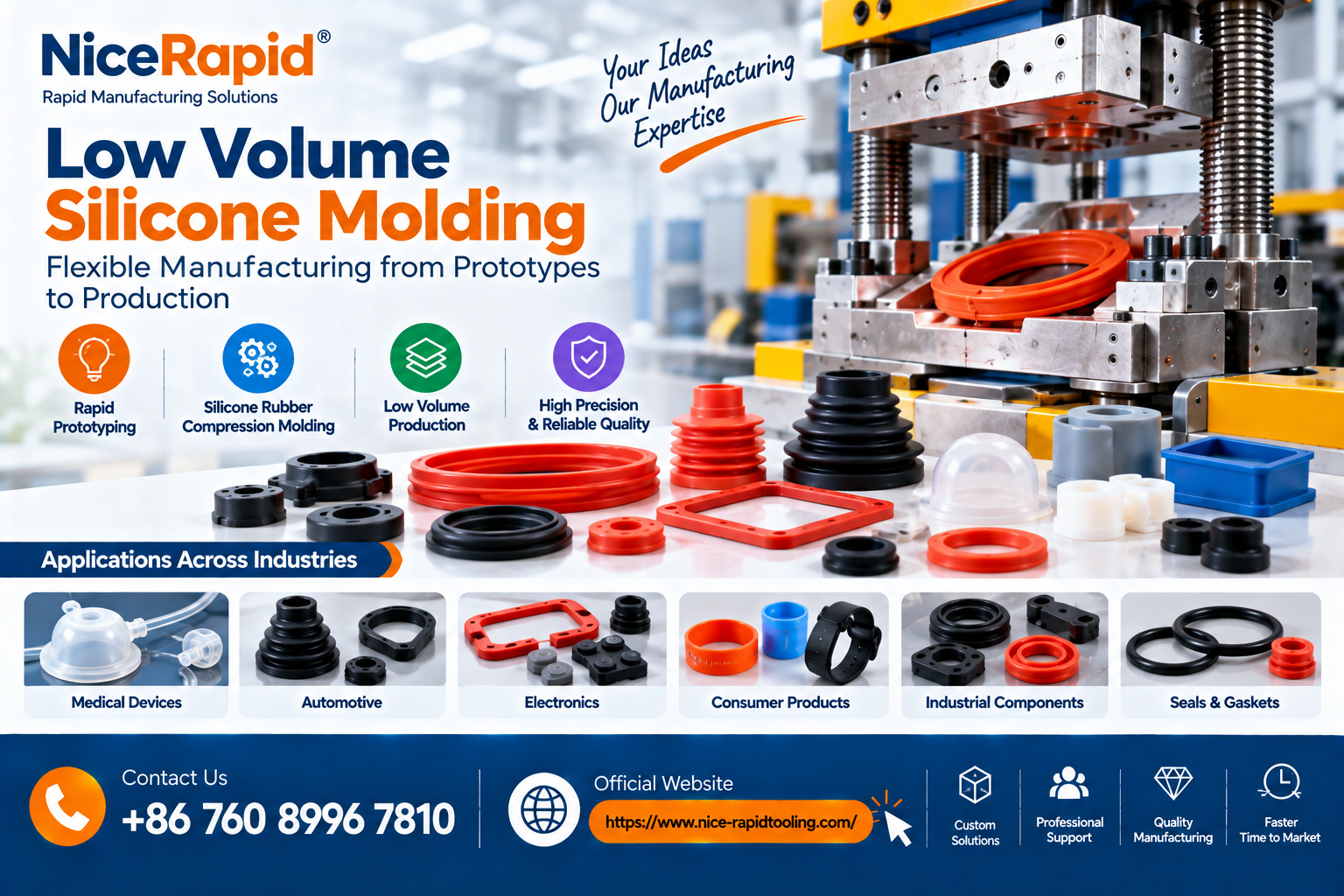
Low volume silicone molding offers an alternative for businesses that require smaller production quantities, customised specifications, and greater flexibility in managing product variations.
Meanwhile, silicone rubber compression molding provides a manufacturing method for creating selected silicone components using controlled heat, pressure, and mould tooling.
Together, these approaches can support product customisation, specialised market requirements, and more adaptable manufacturing strategies.
Why Customisation Is Influencing Manufacturing Decisions
Consumers and industrial customers do not always require identical products.
Different markets may prefer particular colours, dimensions, textures, or functional characteristics.
A manufacturer supplying flexible accessories, silicone grips, protective covers, or specialised rubber components may need several variations of a similar design.
Producing every variation in large quantities can increase inventory requirements.
Smaller production arrangements can help businesses respond to specialised demand while evaluating the commercial suitability of different product configurations.
What Is Low Volume Silicone Molding?
Low volume silicone molding refers to manufacturing silicone rubber components in relatively small production quantities.
The approach is suitable for selected customised products, niche industrial applications, limited product collections, and specialised customer requirements.
Production quantities are determined by factors such as component complexity, tooling arrangements, material selection, and manufacturing economics.
Unlike mass-production strategies, low-volume projects may prioritise flexibility and controlled inventory commitments.
However, small-batch production does not automatically mean lower unit costs.
Manufacturers must evaluate tooling expenses, labour requirements, material usage, and quality expectations before selecting the most appropriate method.
Understanding Silicone Rubber Compression Molding
Silicone rubber compression molding is a manufacturing process that shapes silicone material inside a mould cavity.
A measured quantity of uncured rubber is placed into the tooling, which is then closed under suitable pressure.
Controlled heat enables the material to cure into the required shape.
After curing, the component is removed and inspected, with trimming or additional finishing performed where necessary.
Compression molding can be suitable for selected silicone pads, seals, protective components, flexible accessories, and other customised parts.
Its suitability depends on design geometry, required tolerances, material characteristics, and expected production quantities.
How Small-Batch Molding Supports Product Variations
Businesses offering customised products often need different versions of a similar component.
These variations may involve colour, hardness, dimensions, or surface appearance.
For example, a consumer product manufacturer might offer silicone accessories in different colours for separate product collections.
An industrial supplier may require variations of a sealing component for different equipment configurations.
Smaller production quantities can support these requirements without creating extensive stocks of every variation.
However, changes must be assessed carefully because even minor design modifications may require additional tooling or production adjustments.
The Importance of Colour Consistency in Silicone Products
Colour selection can influence product recognition and customer expectations.
Manufacturers supplying branded accessories or decorative silicone components may need consistent colours across different batches.
Achieving this consistency requires suitable material preparation, appropriate colour specifications, and controlled processing.
Lighting conditions and surface finishes can affect how colours appear.
For this reason, approved physical samples may provide a useful reference during production assessment.
Colour matching should be evaluated alongside material performance rather than treated as an isolated decorative requirement.
Comparing Flexible Silicone Manufacturing Approaches
| Production Approach | Main Characteristic | Suitable Consideration |
| Low-Volume Manufacturing | Smaller production quantities | Specialised product demand |
| High-Volume Manufacturing | Larger, repeated production quantities | Established product demand |
| Compression Molding | Silicone shaped using heat and pressure | Selected custom components |
| Injection Molding | Material injected into suitable tooling | Automated production requirements |
| Custom Tooling | Tooling developed for specific geometry | Unique product designs |
The appropriate manufacturing strategy depends on technical requirements, expected demand, and production economics.
Why Standardised Design Features Can Reduce Complexity
Customisation does not always require completely different component designs.
Manufacturers may retain a common base geometry while changing selected features.
For example, a silicone accessory could use the same general dimensions across several colour variations.
This approach may allow greater consistency in tooling and inspection procedures.
However, changes to material formulation or product geometry can still influence manufacturing behaviour.
Engineering teams should evaluate which design features can remain standardised and which require separate production arrangements.
This can help businesses offer product variety without introducing unnecessary complexity.
Managing Tooling Costs for Custom Products
Tooling investment is an important consideration in silicone component manufacturing.
A custom mould must reflect the required shape, material behaviour, and dimensional expectations.
More complicated geometries may involve additional machining or tooling development.
For limited production quantities, these expenses can represent a significant portion of the overall project cost.
Businesses should therefore evaluate anticipated demand and possible future variations before approving tooling.
In suitable applications, compression molding may provide a practical tooling arrangement.
Nevertheless, cost comparisons should reflect the actual component rather than general assumptions about manufacturing methods.
Quality Assurance Across Different Product Variants
Producing several silicone variations creates additional quality management responsibilities.
Each approved design should have clearly defined specifications.
These may address dimensions, appearance, material hardness, and relevant functional characteristics.
Manufacturers should also establish appropriate methods for identifying different versions.
Clear documentation helps prevent confusion between similar components.
Inspection requirements should reflect the intended application.
A decorative silicone accessory may have different acceptance criteria from a functional sealing component.
Reliable quality control supports consistency even when production quantities remain relatively small.
How Flexible Manufacturing Supports Inventory Planning
Inventory management is an important part of manufacturing profitability.
Producing excessive quantities of a specialised product may create storage expenses and unsold stock.
Smaller production batches can help organisations align selected product quantities more closely with anticipated demand.
However, low-volume manufacturing may involve higher unit costs and different supply arrangements.
Businesses should compare these factors with their inventory requirements.
The most suitable strategy balances manufacturing expenses, product availability, and the commercial risks associated with uncertain demand.
Choosing a Silicone Molding Partner for Customised Products
Companies seeking specialised silicone production should evaluate both manufacturing capabilities and communication procedures.
Important considerations include:
- Customisation Capability: Support for defined colours, shapes, and material specifications.
- Tooling Expertise: Suitable mould design and manufacturing knowledge.
- Material Selection: Understanding of silicone performance requirements.
- Quality Management: Consistent inspection and product identification.
- Production Flexibility: Appropriate arrangements for different order quantities.
- Technical Communication: Clear management of design revisions and specifications.
A suitable manufacturer should explain the practical implications of customisation before production commitments are made.
Frequently Asked Questions (FAQs)
1. What is low volume silicone molding?
It is the production of silicone rubber components in smaller quantities for specialised applications, customised products, and limited manufacturing requirements.
2. How does silicone rubber compression molding work?
The process involves placing silicone material into a mould and applying controlled heat and pressure to create the required component shape.
3. Can silicone parts be manufactured in different colours?
Yes. Suitable silicone formulations can support various colours, subject to material compatibility and manufacturing requirements.
4. Is low-volume silicone manufacturing suitable for customised products?
Yes. It can support specialised designs and product variations when tooling costs, specifications, and production quantities are appropriate.
5. What affects the price of custom silicone molding?
Tooling complexity, material selection, component dimensions, product variations, order quantities, and quality requirements can influence overall costs.
Media Contact
Department: Custom Silicone Manufacturing and Precision Tooling Enquiries
Enquiry Categories: Low Volume Silicone Molding, Silicone Rubber Compression Molding, Custom Silicone Products, Small Batch Manufacturing, and Precision Tooling.
Contact: +86 760 8996 7810
Email: enquiry@nice-rapidtooling.com
Official Website: https://www.nice-rapidtooling.com/