
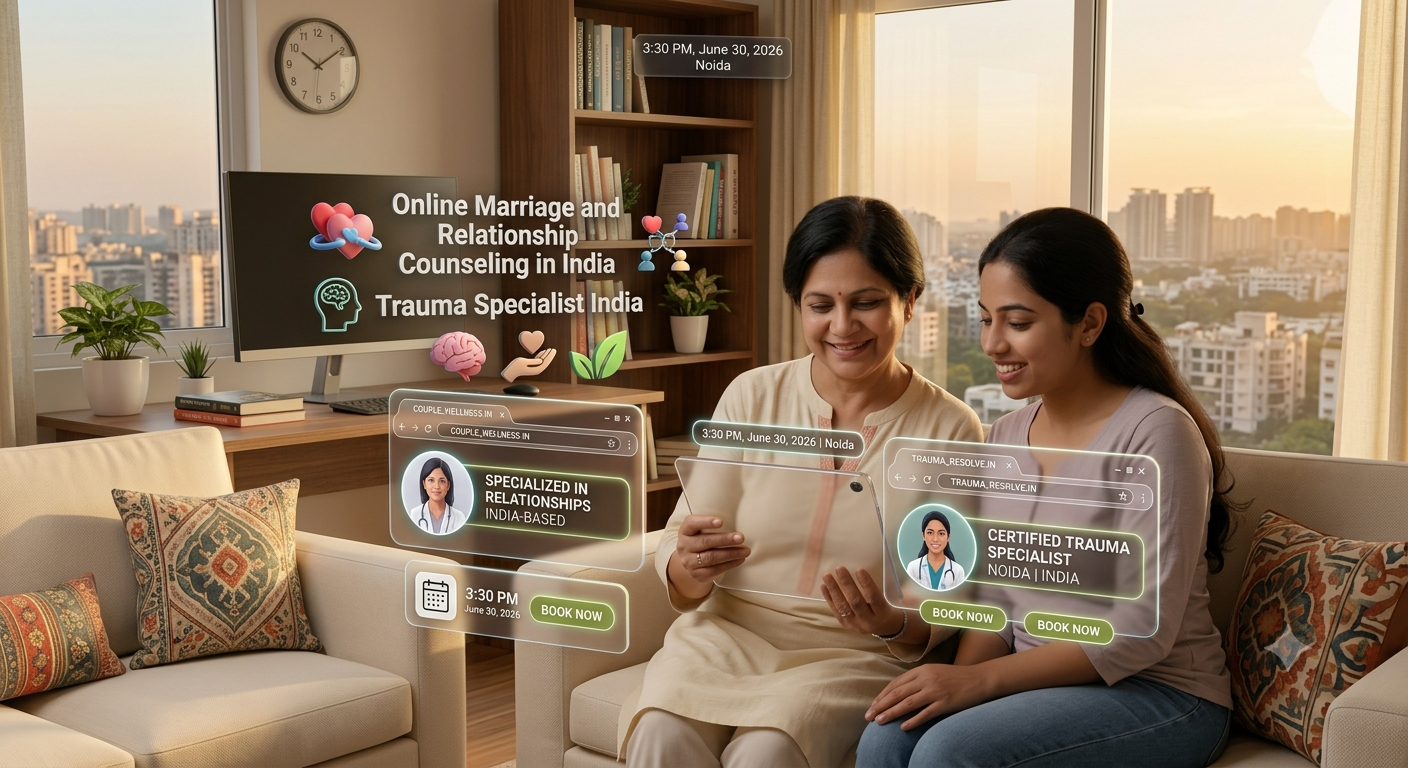
Marriage has never been only about two people. Careers, finances, children, family expectations, personal ambitions and social responsibilities all influence how a relationship develops. Add smartphones, remote work, long-distance careers and constantly changing lifestyles, and maintaining emotional connection can become surprisingly complicated.
This does not mean modern relationships are weaker. It means couples are dealing with a different combination of pressures.
As conversations around emotional wellbeing become more open, options such as online marriage and relationship counseling in India are giving couples new ways to address communication and relationship difficulties. At the same time, greater awareness of psychological trauma has encouraged people to understand how earlier life experiences may influence their present relationships, increasing interest in finding an appropriately qualified trauma specialist India.
A Relationship Can Look Fine and Still Feel Difficult
Relationship problems are not always dramatic.
Sometimes there is no major betrayal, constant shouting or obvious crisis. Instead, couples slowly stop talking about meaningful things.
Conversations become limited to everyday responsibilities:
“Did you pay the bill?”
“Who is picking up the children?”
“What time will you be home?”
“Did you call your parents?”
Everything appears functional, but emotional closeness gradually disappears.
Other couples experience the opposite problem. Almost every conversation becomes an argument, including disagreements about relatively minor matters.
These situations can develop because of:
- Unspoken expectations
- Poor communication
- Work pressure
- Financial uncertainty
- Parenting stress
- Differences in priorities
- Lack of quality time
- Trust concerns
- Intimacy difficulties
- Extended-family boundaries
When these patterns continue, couples can begin reacting to each other’s behaviour rather than understanding what lies underneath it.
Why Communication Advice Isn’t Always Enough
“Communicate better” is probably one of the most common pieces of relationship advice.
But what does better communication actually mean?
Talking more does not necessarily solve anything when every conversation follows the same unhealthy pattern.
Imagine a partner saying:
“You never have time for me.”
The other person hears an accusation and replies:
“I’m working all day for this family. What else do you expect?”
Now both people are defensive.
The first person may actually be trying to express loneliness. The second may be expressing a need for appreciation.
Neither message is communicated clearly.
This is one area where online marriage and relationship counseling in India can provide a structured environment for examining not only what couples discuss but how they communicate.
Why Online Counseling Fits Changing Indian Lifestyles
Accessing counselling traditionally meant finding a professional nearby, travelling to a clinic and coordinating appointments around both partners’ schedules.
Online sessions can remove some of these logistical barriers.
A professional working in Gurugram may have a spouse working in Bengaluru. A couple may frequently travel internationally. Parents may find it difficult to leave children at home for regular appointments.
Remote counselling can provide greater location flexibility in these situations.
However, convenience should not be confused with suitability. Privacy, safety, internet connectivity, the nature of the concern and professional assessment can all influence whether online sessions are appropriate.
The Part of Relationships We Rarely Discuss: What We Bring From the Past
Every person enters a relationship with a history.
We learn about trust, affection, conflict, boundaries and communication long before entering our first serious romantic relationship.
For example, someone raised in a family where disagreements were calmly discussed may consider conflict uncomfortable but manageable.
Someone who repeatedly witnessed frightening arguments while growing up may experience conflict very differently.
The present partner may be completely different from people in the past, but certain situations can still produce strong emotional reactions.
This is where the relationship between trauma and emotional behaviour becomes particularly important.
What Is Psychological Trauma?
Trauma can result from experiences that are perceived as deeply distressing, frightening or overwhelming.
Potential experiences may include:
- Childhood neglect or abuse
- Domestic violence
- Sexual violence
- Serious accidents
- Sudden bereavement
- Relationship abuse
- Bullying
- Medical emergencies
- Workplace harassment
- Natural disasters
- Exposure to threatening events
People respond differently to difficult experiences. Two people can experience similar events and have completely different psychological responses.
A trauma specialist India with appropriate qualifications and trauma-informed training can assess someone’s circumstances and recommend suitable professional support.
How Past Trauma May Influence Present Relationships
Past experiences do not always remain neatly separated from current life.
They can sometimes influence behaviour without a person immediately recognising the connection.
Trust May Feel Risky
Someone who previously experienced betrayal may constantly look for signs that another betrayal could happen.
Conflict May Feel Threatening
An ordinary disagreement can produce an intense emotional reaction when conflict has previously been associated with danger.
Emotional Closeness May Become Difficult
Healthy intimacy involves vulnerability. For someone who has previously been hurt after becoming vulnerable, emotional distance can become a form of protection.
Silence May Be Misinterpreted
A partner asking for space after an argument may simply need time to think. Someone with previous experiences of abandonment might interpret the same behaviour as rejection.
These patterns do not automatically indicate trauma. Human behaviour is complex, which is precisely why self-diagnosis should be avoided.
A qualified trauma specialist India can help distinguish between everyday emotional reactions and concerns that may require specialised psychological support.
Couples Counseling and Trauma Therapy Serve Different Purposes
Understanding the distinction is useful.
| Couples Counseling | Trauma-Focused Therapy |
| Examines the relationship | Examines individual experiences |
| Often includes both partners | Often conducted individually |
| Focuses on communication patterns | Focuses on trauma-related responses |
| Addresses relationship conflicts | Addresses emotional triggers |
| Develops relationship skills | Develops coping strategies |
| Explores shared goals | Explores individual recovery needs |
These approaches are not necessarily competing alternatives.
Some couples may benefit from online marriage and relationship counseling in India, while one partner simultaneously receives appropriate individual support.
Any combination of therapies should be discussed with qualified professionals.
The Right Time to Consider Relationship Counseling
There is rarely a perfect moment.
However, certain patterns deserve attention when they persist.
Consider professional guidance when:
- Every disagreement becomes the same argument.
- You regularly avoid important conversations.
- Trust has become difficult to maintain.
- One partner feels chronically unheard.
- Emotional or physical intimacy has significantly changed.
- Family interference repeatedly causes conflict.
- Past experiences regularly influence present disagreements.
- Separation is repeatedly discussed during arguments.
- You feel more like housemates than partners.
- Attempts to improve the relationship independently are not working.
Counselling does not guarantee reconciliation, nor should responsible professionals promise such an outcome. Its value lies in helping people better understand their circumstances and available choices.
Choosing a Mental Health Professional in India
Searching online for a counsellor can produce hundreds of profiles, making selection difficult.
Start with qualifications rather than popularity.
Look at the professional’s education, training, experience and relevant credentials or registrations where applicable.
For online marriage and relationship counseling in India, specifically ask about experience working with couples.
If trauma is a concern, look beyond the word “trauma” in a profile. Ask a potential trauma specialist India about their trauma-informed education, clinical experience and therapeutic approach.
Confidentiality is another important consideration. Clients should understand how online sessions are conducted and how personal information is managed.
Most importantly, therapy should provide an environment where difficult subjects can be discussed respectfully.
Frequently Asked Questions
1. Why do couples consider online relationship counseling?
Common reasons include recurring conflict, communication problems, emotional distance, trust concerns, parenting disagreements and major life transitions.
2. Is online marriage counseling only for married people?
No. Dating, engaged and long-term partners may also consider relationship counselling.
3. Can one partner take counseling alone?
Yes. Individual counselling can help someone better understand personal emotions, boundaries and relationship behaviours.
4. What does a trauma specialist India work with?
Trauma-informed professionals may support people experiencing psychological difficulties associated with distressing or overwhelming experiences.
5. Does past trauma always affect relationships?
No. Everyone responds differently. However, previous experiences can sometimes influence trust, intimacy and emotional reactions.
6. Can online counseling work for long-distance couples?
It can offer practical advantages because partners may be able to join remotely from different locations.
7. Is every relationship argument a sign that counseling is needed?
No. Disagreements are normal. Professional support becomes worth considering when unhealthy patterns are persistent or significantly affecting wellbeing.
8. How long does couples counseling take?
There is no predetermined duration. It varies according to the concerns, therapeutic goals and progress.
9. Can trauma therapy and marriage counseling happen at the same time?
They may in some circumstances. The decision should be based on individual needs and professional recommendations.
10. What should I check before selecting a counselor?
Review qualifications, relevant experience, professional credentials, confidentiality practices, therapeutic approach and your comfort communicating with the professional.
https://newsgrow.blogspot.com/2026/08/online-marriage-and-relationship.html