
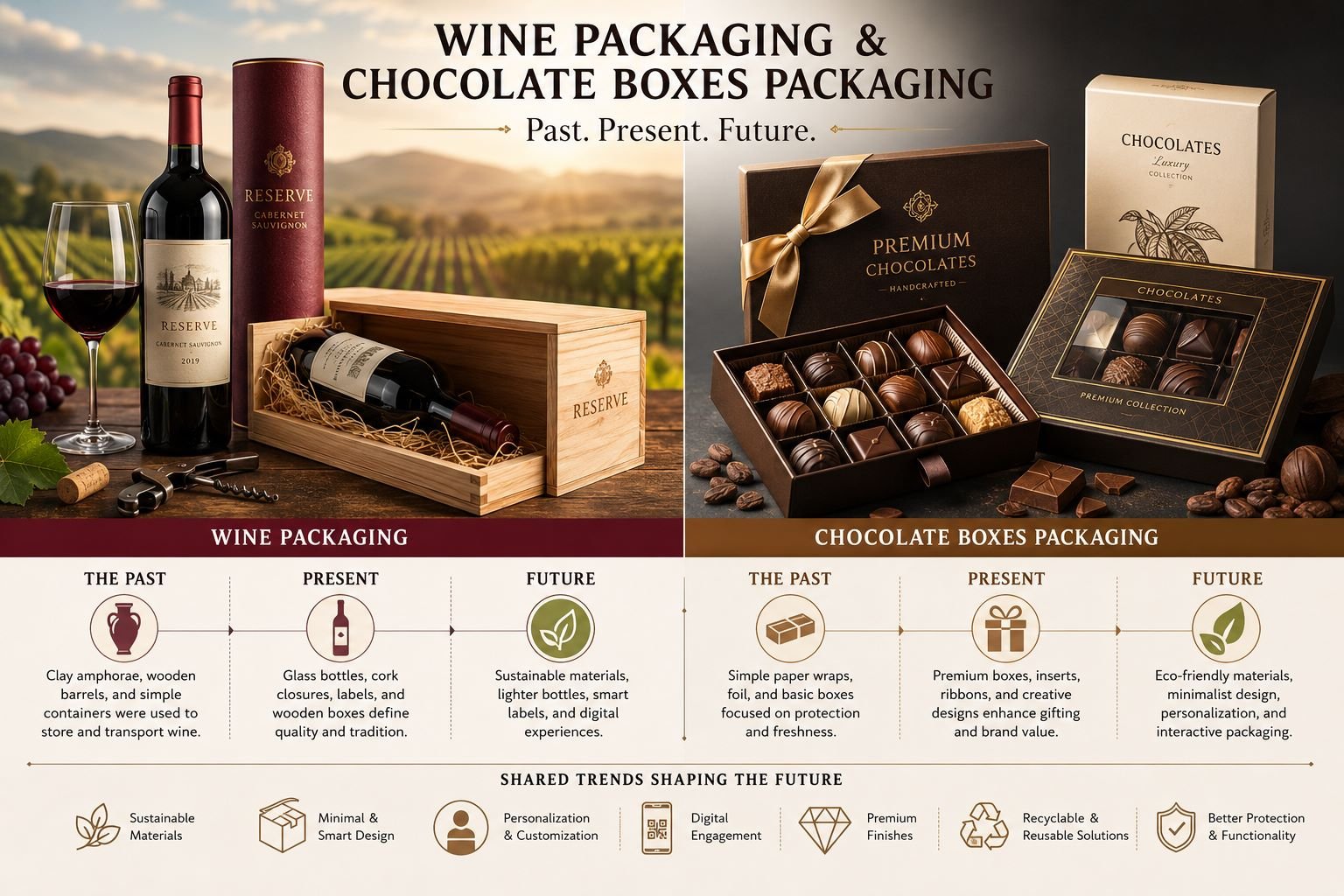
Premium product packaging is undergoing a noticeable transformation as brands respond to changing consumer expectations, environmental considerations, and new purchasing habits. Among the categories seeing continued innovation are wine packaging and chocolate boxes packaging, two areas where presentation has become almost as important as protection.
Once designed primarily to contain and transport products, packaging now plays a broader commercial role. It helps communicate quality, supports brand recognition, improves gifting experiences, and increasingly connects physical products with digital information.
The next phase of development is expected to focus less on excessive decoration and more on intelligent design, material efficiency, personalization, and functionality.
Wine Packaging Reflects a Long History of Innovation
The story of wine packaging begins long before modern bottles appeared on retail shelves. Wine was historically transported and stored using clay vessels, ceramic containers, and wooden barrels.
Glass bottles eventually provided producers with a practical format that supported storage, distribution, and presentation. Cork closures and printed labels further established the classic wine bottle identity recognized around the world.
For many years, these components were largely functional. As wine markets expanded, however, producers discovered that packaging could influence how consumers perceived their products.
Bottle design became part of brand positioning.
Wine Labels Move From Identification to Communication
Today’s wine label has a considerably larger role than simply displaying a product name.
Depending on the product and market, packaging can communicate origin, grape variety, vintage, producer information, tasting characteristics, and brand heritage.
Visual elements can also influence perception.
Typography, illustration, paper texture, embossing, foiling, bottle shape, and label structure help distinguish one wine from another.
For premium products, wine packaging can therefore act as a silent introduction to what is inside the bottle.
Sustainability Begins to Influence Bottle Design
One of the biggest questions facing future packaging is how brands can maintain premium presentation while using materials more efficiently.
Heavy bottles have traditionally been associated with premium positioning in some markets. However, additional weight can also mean greater material use and transportation requirements.
This is encouraging interest in:
- Lightweight glass bottles
- Recycled glass
- Recyclable secondary packaging
- Reduced packaging components
- Alternative formats
- Efficient shipping structures
- Responsible material selection
Sustainability is consequently becoming a design consideration rather than something addressed only after packaging has been developed.
Smart Wine Packaging Opens New Communication Channels
Physical labels have limited space. Digital platforms do not.
This distinction is creating opportunities for connected wine packaging using QR codes, NFC technologies, and other digital identification methods.
A consumer scanning a bottle could potentially access information about the vineyard, production process, food pairings, serving recommendations, sustainability practices, or product authenticity.
Digital Packaging Could Strengthen Transparency
Connected experiences may become especially useful as consumers seek greater transparency about the products they purchase.
Instead of filling a label with excessive information, brands can use physical packaging for essential communication and digital channels for deeper storytelling.
Personalization Creates Another Growth Opportunity
Advances in digital printing also make customized wine labels more practical.
Personalized packaging can be developed for weddings, corporate gifting, hotels, restaurants, anniversaries, festivals, and limited-edition releases.
This gives producers an opportunity to turn packaging into a more individual experience.
Chocolate Boxes Packaging Evolves Around Gifting
The development of chocolate boxes packaging has been strongly influenced by the emotional nature of the product.
Chocolate is regularly purchased as a gift for birthdays, weddings, anniversaries, festivals, romantic occasions, and corporate events. As a result, manufacturers have long understood that presentation can influence perceived value.
Simple wrappers and containers gradually developed into sophisticated boxes with individual compartments, decorative papers, ribbons, sleeves, and premium finishes.
Packaging became part of the celebration rather than something customers simply removed and discarded.
Unboxing Becomes Part of Chocolate Branding
Modern consumers do not experience premium chocolates only through taste.
They see the box, touch its surface, open the lid, discover the arrangement, and then select the first chocolate.
Each step contributes to the perception of the brand.
This has encouraged premium chocolate boxes packaging to incorporate features such as rigid structures, drawer openings, magnetic closures, textured surfaces, custom inserts, embossing, and decorative sleeves.
However, visual design cannot be the only priority.
Protection Remains Essential
Chocolate products can be delicate, making structural packaging performance particularly important.
A suitable box may need to address:
- Product movement
- Crushing
- Breakage
- Moisture exposure
- Product separation
- Storage
- Transportation
These considerations have become more important with the expansion of e-commerce.
A package that looks impressive on a retail shelf must now also survive a considerably more complex journey to the customer’s doorstep.
E-Commerce Changes the Definition of Good Packaging
Online shopping has introduced a simple test for premium packaging: Does the product still look premium when it arrives?
Wine bottles can face impact and breakage during delivery. Chocolate boxes may experience compression, movement, or damage to internal arrangements.
Brands therefore need to think beyond visual presentation.
Future wine packaging and chocolate boxes packaging will increasingly need to combine attractive consumer-facing designs with structures suitable for modern distribution networks.
This may encourage more compact dimensions, improved internal protection, and smarter use of secondary packaging.
Sustainable Chocolate Packaging Moves Into Focus
Chocolate packaging has traditionally used combinations of cardboard, paper, foil, plastic trays, sleeves, ribbons, and decorative components.
While these elements can create an attractive gift, consumers increasingly notice excessive packaging.
This is creating opportunities for simpler, more responsible designs.
Future Chocolate Boxes May Use Less to Achieve More
Potential developments include recyclable paperboard, fibre-based inserts, reusable boxes, reduced plastic components, responsibly sourced paper, and simplified structures.
The goal is not to remove the premium experience.
Instead, brands can create value through better design.
High-quality typography, distinctive structures, tactile materials, embossing, and carefully planned opening experiences can communicate luxury without unnecessary packaging layers.
Comparing the Direction of Wine and Chocolate Packaging
| Market Factor | Wine Packaging | Chocolate Boxes Packaging |
| Historical Focus | Storage and preservation | Protection and gifting |
| Main Format | Bottle and label | Box and inserts |
| Brand Opportunity | Label and bottle identity | Complete unboxing experience |
| Delivery Challenge | Weight and breakage | Crushing and movement |
| Sustainability Focus | Lightweight formats | Material and plastic reduction |
| Customization | Personalized labels | Personalized boxes |
| Smart Technology | QR, NFC, authentication | QR and digital gifting |
| Future Priority | Efficiency and connectivity | Sustainability and experience |
The requirements are different, but the direction is increasingly similar.
Both sectors are looking for ways to make packaging more useful, responsible, distinctive, and engaging.
Five Developments Expected to Influence the Future
Industry innovation is likely to concentrate around several interconnected areas.
- Material efficiency: Packaging structures will increasingly be designed to achieve protection with fewer unnecessary components.
- Recyclability: Brands may prioritize materials and structures that are easier for consumers to understand and dispose of responsibly.
- Digital connectivity: QR codes, NFC, and related technologies can turn physical packages into gateways to digital content.
- Personalization: Shorter customized production runs can help brands target gifting occasions and specific audiences.
- E-commerce performance: Packaging will increasingly be tested against real-world transportation requirements rather than shelf presentation alone.
Together, these developments could significantly influence how premium products are packaged over the coming years.
Frequently Asked Questions
What does wine packaging include?
Wine packaging can include the bottle, closure, label, outer carton, gift box, protective insert, and transportation packaging.
Why is wine packaging changing?
Sustainability expectations, e-commerce, changing lifestyles, new technology, and branding requirements are influencing packaging development.
What is smart wine packaging?
Smart packaging uses technologies such as QR codes or NFC to connect physical bottles with digital information and experiences.
Will traditional wine bottles remain relevant?
Traditional bottles are likely to remain important, particularly for premium products, while lighter and alternative formats continue developing.
What does chocolate boxes packaging include?
Chocolate boxes packaging includes outer boxes, trays, inserts, compartments, sleeves, wrappers, and decorative components.
Why is chocolate packaging important?
It protects delicate products while supporting gifting appeal, brand recognition, presentation, and the overall customer experience.
How is sustainability influencing chocolate boxes?
Brands are exploring recyclable paperboard, reduced plastics, fibre inserts, reusable structures, and more efficient packaging designs.
Why does e-commerce require different packaging?
Online orders experience additional transportation and handling, increasing the importance of structural protection and secure product positioning.
Can packaging be both sustainable and luxurious?
Yes. Premium presentation can come from thoughtful structure, typography, texture, and material quality rather than excessive packaging.
What role will personalization play in future packaging?
Customization can help brands create distinctive products for events, gifting, corporate campaigns, celebrations, and limited editions.
https://newsgrow.blogspot.com/2026/08/cosmetic-packaging-boxes-deep-guide-to.html
https://newsgrow.blogspot.com/2026/08/luxury-cosmetic-packaging-and-perfume.html
https://tandtlawassociates.com/wine-packaging-and-chocolate-boxes-packaging-past-present-and-future/