
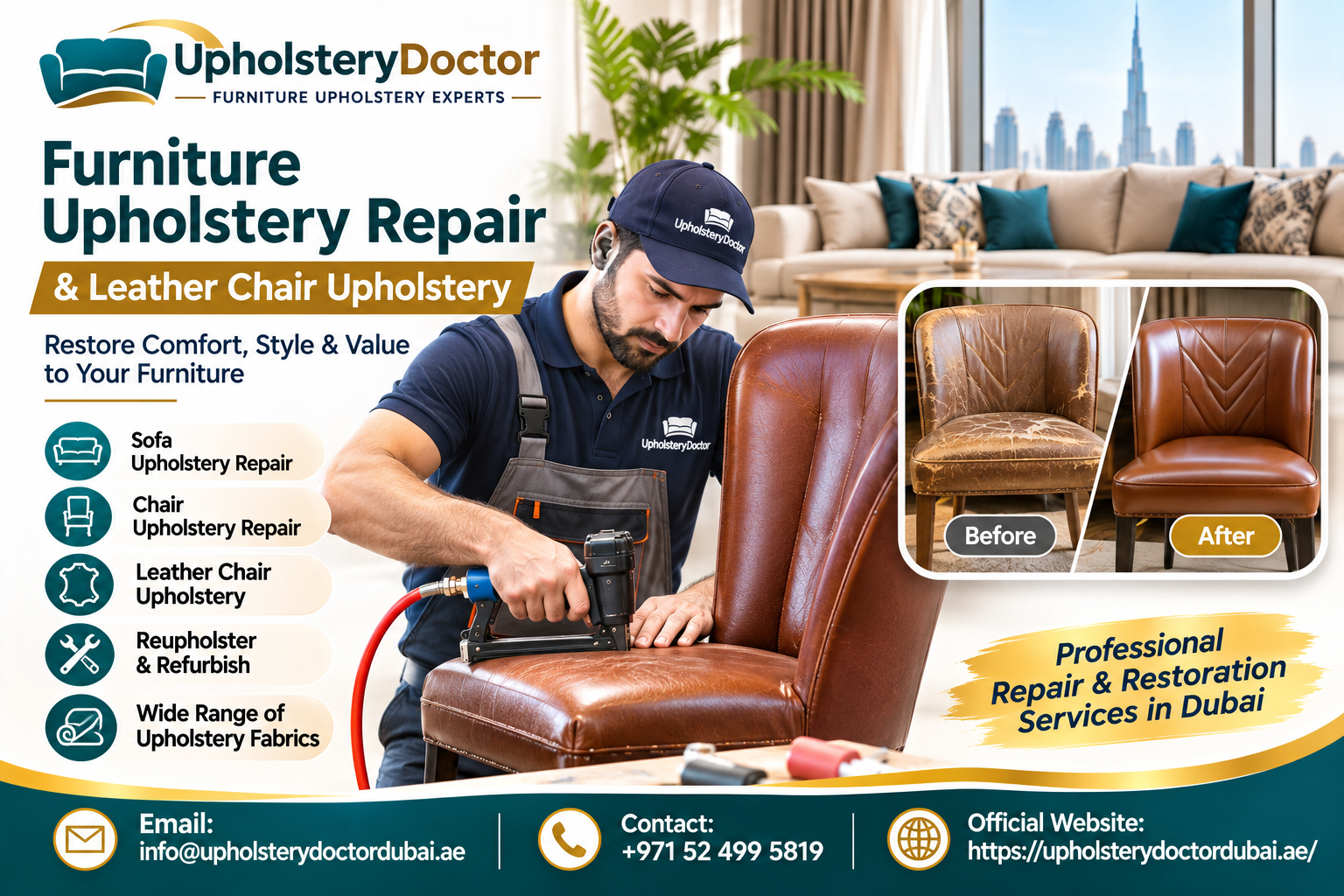
In these settings, upholstered furniture contributes significantly to comfort, functionality, and visual appeal.
However, regular use can leave even well-maintained furniture showing signs of deterioration. Faded upholstery, damaged stitching, worn leather, and compressed cushions can gradually affect appearance and seating quality.
Professional Furniture Upholstery Repair provides an alternative to immediate furniture replacement, allowing suitable pieces to be restored through targeted improvements.
Among specialized restoration services, Leather Chair Upholstery requires particular attention because leather has unique characteristics that influence repair techniques, material selection, and maintenance.
For property owners, the decision to restore furniture is increasingly connected to practical considerations such as preserving distinctive designs, maintaining interior consistency, and managing furnishing expenses.
Why Leather Chairs Require Specialized Upholstery Attention
Leather chairs are commonly selected for executive offices, luxury residences, reception areas, and hospitality environments because of their distinctive appearance and comfortable seating surfaces.
Unlike many woven upholstery fabrics, leather requires material-specific maintenance and restoration techniques.
Its condition can be influenced by regular friction, direct sunlight, cleaning products, temperature exposure, and general usage.
Common problems include:
- Surface cracks: Deterioration that may develop from aging, environmental exposure, or unsuitable care.
- Color fading: Changes in appearance caused by sunlight and repeated contact.
- Damaged stitching: Seams that weaken under continuous use.
- Surface scratches: Visible marks caused by friction or contact with objects.
- Cushion deterioration: Reduced seating support caused by worn internal filling.
Professional assessment helps determine whether localized treatment, panel replacement, or complete reupholstery is appropriate.
Understanding the Furniture Upholstery Repair Process
Successful upholstery restoration begins with evaluating the existing furniture.
A technician should examine the covering material, seating support, frame condition, and visible signs of damage before recommending a repair method.
The process may involve removing damaged upholstery, inspecting internal components, restoring suitable cushioning, and fitting replacement materials where necessary.
For leather furniture, the assessment should also identify the leather type and finish.
An important furniture restoration principle explains:
This approach helps ensure that repairs address actual deterioration rather than temporarily concealing underlying problems.
Choosing the Right Leather for Chair Upholstery
Material selection is one of the most important considerations in Leather Chair Upholstery.
Different leather types provide distinct textures, appearances, maintenance requirements, and performance characteristics.
Full-Grain Leather
Full-grain leather retains the natural grain surface and may develop a distinctive appearance through use. Its suitability depends on the leather quality, finish, and intended application.
Top-Grain Leather
Top-grain leather is processed to produce particular surface characteristics and finishes. It is used in various furniture applications where appearance and comfort are important.
Corrected-Grain Leather
Corrected-grain leather undergoes surface finishing to create a more consistent appearance. Performance depends on its construction and finishing quality.
Synthetic Leather Alternatives
Some furniture owners consider high-quality synthetic upholstery materials for particular applications. These are not genuine leather, and their durability varies according to composition and manufacturing quality.
Choosing suitable upholstery should involve consideration of usage frequency, cleaning requirements, comfort, and available budget.
Leather Chair Restoration for Commercial Spaces
Commercial furniture often experiences more frequent use than residential seating.
Office chairs, reception furniture, conference room seating, and hospitality furniture may undergo repeated daily contact.
For businesses, damaged upholstery can affect the appearance of shared environments and contribute to an untidy impression.
Professional Furniture Upholstery Repair may help maintain a coordinated interior by restoring suitable furniture rather than replacing individual pieces with mismatched alternatives.
Commercial customers should evaluate material durability, repair costs, maintenance requirements, and the structural condition of existing furniture.
Restoration decisions should also consider whether the completed furniture will remain appropriate for its intended use.
How Dubai’s Climate Influences Leather Furniture Care
Dubai’s environmental conditions can influence the maintenance requirements of upholstered furniture.
Direct sunlight and heat exposure may affect certain leather finishes, while indoor cooling can contribute to changing environmental conditions.
However, leather deterioration depends on multiple factors, including material quality, surface treatment, usage, and maintenance.
Furniture owners can reduce avoidable damage by positioning chairs away from intense direct sunlight where practical.
Cleaning products should be appropriate for the specific leather type and finish.
Harsh chemicals and excessive moisture may damage sensitive surfaces.
A useful upholstery care principle states:
Regular inspection can also help identify minor damage before more extensive restoration becomes necessary.
Repair or Replacement: Making the Right Furniture Decision
Not every damaged chair requires replacement.
A leather chair with a stable frame and worn upholstery may be suitable for restoration.
In contrast, furniture with serious structural damage may require extensive work that is not economically reasonable.
Several factors can guide the decision:
- Frame condition: Determine whether the chair remains structurally sound.
- Upholstery damage: Identify whether damage is localized or widespread.
- Seating comfort: Assess cushioning, support, and internal components.
- Restoration expenses: Compare repair costs with equivalent replacement furniture.
- Design value: Consider the chair’s appearance, uniqueness, and suitability for the room.
A professional assessment helps property owners make informed decisions based on the furniture’s actual condition.
Why Skilled Workmanship Matters in Leather Upholstery
Leather upholstery restoration requires attention to cutting, measurements, stitching, surface tension, and finishing.
Poorly fitted material may create wrinkles, uneven surfaces, or unnecessary stress around seams.
Accurate workmanship helps replacement upholstery follow the original shape of the chair while maintaining comfort.
Technicians should also consider whether existing internal components remain suitable for continued use.
When material selection and installation are properly coordinated, restored furniture can achieve a more consistent appearance and improved functionality.
Furniture Restoration and Responsible Interior Management
Extending the useful life of existing furniture can support more thoughtful furnishing decisions.
Suitable upholstery restoration may reduce unnecessary disposal while preserving valuable furniture frames and components.
However, the environmental advantages depend on the materials used, transportation, repair requirements, and condition of the original furniture.
For homeowners and commercial property managers, the practical objective should be selecting the most appropriate solution for comfort, appearance, cost, and continued usability.
Frequently Asked Questions (FAQs)
1. What is Furniture Upholstery Repair?
Furniture Upholstery Repair involves restoring damaged furniture coverings, stitching, cushioning, and related components to improve appearance, comfort, and usability. The necessary work depends on the condition of the furniture.
2. Can damaged leather chairs be repaired?
Yes. Many leather chairs can undergo restoration when their underlying structure remains suitable. Depending on the damage, repairs may involve seam restoration, surface treatment, panel replacement, or complete reupholstery.
3. What materials are best for Leather Chair Upholstery?
Suitable materials depend on the chair’s intended use and budget. Genuine leather options include full-grain, top-grain, and corrected-grain leather, while some synthetic alternatives may suit particular applications.
4. Is leather chair reupholstery more affordable than replacement?
It can be, especially when the original frame is durable and the chair has significant design or functional value. Final costs depend on material selection, furniture condition, and the required workmanship.
5. How can I maintain leather upholstered furniture in Dubai?
Avoid unnecessary direct sunlight, use leather-compatible cleaning products, follow manufacturer care instructions, and inspect upholstery regularly for visible wear or damage.
Media Contact
Department: Customer Enquiries & Furniture Restoration Services
Industry: Furniture Upholstery, Leather Chair Restoration & Interior Furnishing
Location: Dubai, United Arab Emirates
Contact: +971 52 499 5819
Email: info@upholsterydoctordubai.ae
Official Website: https://upholsterydoctordubai.ae/