
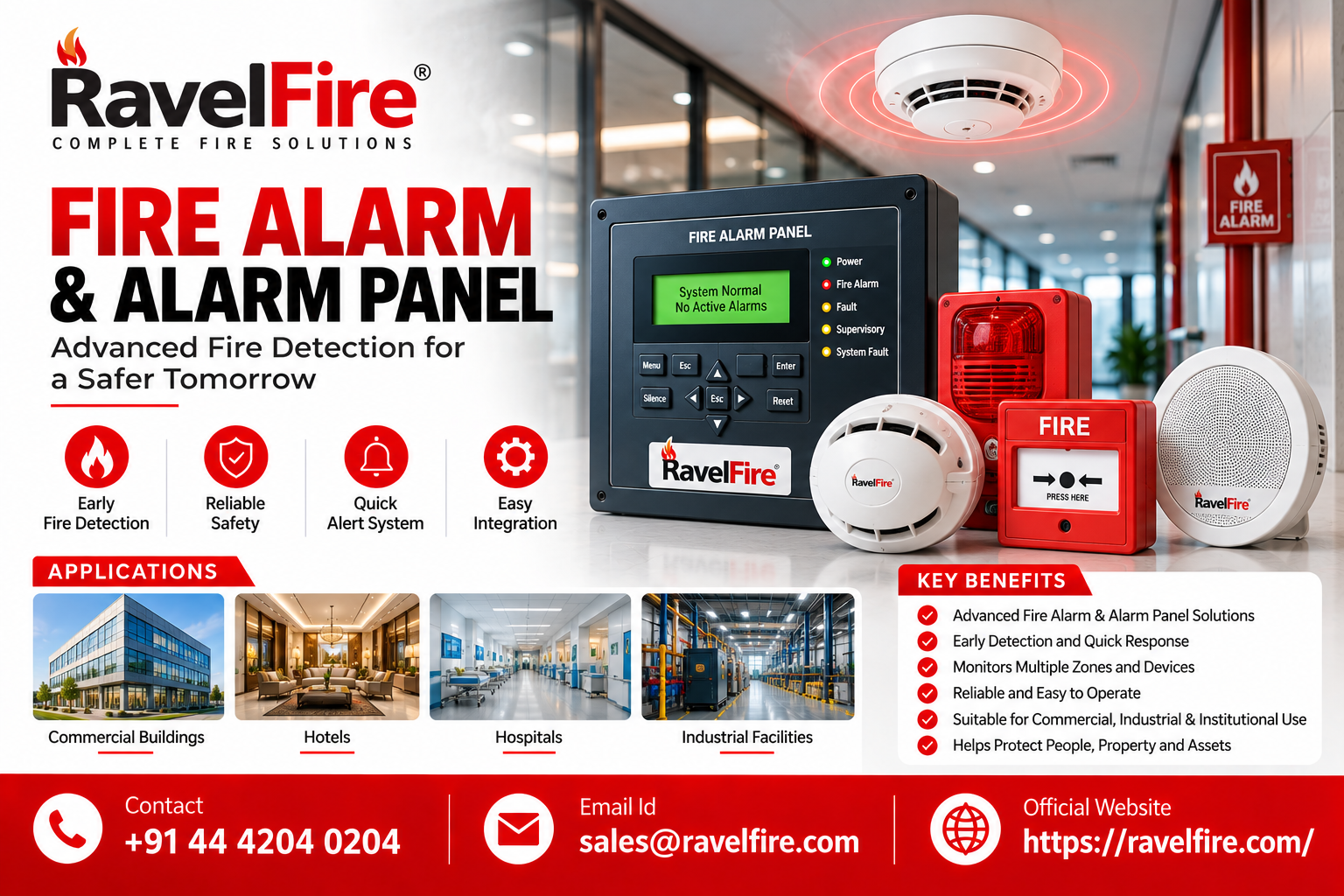
Building safety is becoming more intelligent as commercial, industrial and institutional properties adopt better ways to detect hazards, communicate warnings and coordinate emergency response. At the centre of this transformation is the modern fire alarm system, supported by an advanced alarm panel that helps monitor detectors, process signals and provide clear information to building operators.
As properties become larger and more complex, simple standalone alarms are no longer enough for many applications. Facilities increasingly need connected systems that can identify where an incident has occurred, distinguish between alarm and fault conditions, and help responsible personnel take faster action.
What Is a Fire Alarm System?
A fire alarm system is a network of devices designed to detect conditions associated with fire and notify occupants or responsible personnel.
Depending on the building and system design, it may include smoke detectors, heat detectors, manual call points, sounders, visual indicators and other connected devices.
When a detector identifies a potential fire condition, it sends a signal to the central control equipment. The system then activates the appropriate warning devices and displays information about the event.
Common applications include:
- Commercial offices
- Hotels
- Hospitals
- Educational institutions
- Warehouses
- Manufacturing facilities
- Shopping centres
- Residential complexes
The effectiveness of the system depends on proper planning, correct device selection and regular testing.
What Is an Alarm Panel?
An alarm panel is the central control unit of the fire detection network.
It receives signals from connected detectors and input devices, interprets the information and displays system status.
Depending on its design, the panel may show:
- Fire alarm conditions
- Fault conditions
- Zone information
- Device status
- Power conditions
- Supervisory events
- Output activation
This information helps facility managers, security teams and emergency responders understand what is happening inside the building.
Why Modern Fire Alarm Systems Are More Intelligent
Older systems were often designed primarily to activate an alarm when smoke or heat was detected.
Modern fire alarm technology can provide much more detailed monitoring.
Advanced systems can help identify a specific detector, zone or area associated with an event.
This can improve emergency response because personnel do not need to search the entire building to locate the source of an alarm.
The alarm panel can also provide fault information, helping maintenance teams identify disconnected devices, wiring problems or power-related issues.
This makes fire safety more proactive rather than purely reactive.
Early Detection Remains the Main Priority
Despite improvements in system intelligence, the primary purpose of any fire alarm remains early detection.
A developing fire can spread differently depending on the materials involved, airflow and building layout.
Early detection can provide occupants with additional time to evacuate and help facility teams begin emergency procedures.
Smoke detectors, heat detectors and other sensing technologies should therefore be selected according to the actual risks of the building.
The alarm panel then serves as the point where these detection signals are collected and communicated.
Commercial Buildings Need Centralised Monitoring
Office buildings and commercial complexes often contain multiple floors, departments and shared spaces.
A centralised alarm panel can help security personnel understand where an alarm has originated.
This is especially useful when dozens or hundreds of detectors are installed throughout the property.
A complete fire alarm system can also include audible and visual notification devices so warnings reach occupants across different areas.
In large facilities, zone-based or device-level information can simplify emergency investigation and building management.
Hospitals Require Reliable Fire Detection
Healthcare facilities present unique safety challenges.
Hospitals contain patients with different mobility levels, specialised equipment, electrical systems and continuously occupied spaces.
A dependable fire alarm system is therefore an important part of the overall safety infrastructure.
An intelligent alarm panel can help staff identify the affected area quickly and coordinate appropriate procedures.
In complex healthcare environments, accurate location information can be particularly valuable because immediate evacuation of every area may not always be practical.
The system design should support the facility’s established emergency strategy.
Industrial Facilities Have Different Risks
Industrial buildings often contain machinery, electrical systems, combustible materials and complex production processes.
These conditions can require specialised detection strategies.
An alarm panel can centralise signals from multiple areas, allowing operators to monitor production floors, utility rooms, warehouses and electrical zones.
The fire alarm system may also need to integrate with additional building safety functions depending on the site’s requirements.
Professional risk assessment becomes especially important in industrial environments because dust, heat, airflow and other operational conditions may affect detector selection.
Warehouses Benefit From Clear Alarm Identification
Warehouses can be challenging because of their size, ceiling height and changing storage layouts.
A fire developing in one section may be difficult to identify visually from another part of the building.
A properly designed fire alarm system can provide early warning across the storage area.
When connected to an intelligent alarm panel, the system can help staff identify which zone has triggered the alarm.
This can support a more focused emergency response.
Maintenance teams can also use the panel to identify faults or devices that require attention.
Alarm Panels Support System Diagnostics
One major advantage of modern control equipment is the ability to provide system health information.
An alarm panel may display a fault when a detector becomes disconnected, wiring is damaged or power conditions change.
This allows maintenance teams to investigate problems before an emergency occurs.
Some systems can also provide event history or device-specific information.
The goal is to ensure that the fire alarm network remains operational and ready to respond when needed.
Regular monitoring of panel status should therefore be part of facility management procedures.
Installation Quality Is Critical
Even advanced fire detection technology can perform poorly if it is not installed correctly.
System planning should consider:
- Building layout
- Ceiling height
- Detector spacing
- Occupancy
- Environmental conditions
- Wiring design
- Panel capacity
- Alarm audibility
- Maintenance access
The alarm panel must also be compatible with the connected detectors and notification devices.
Professional commissioning should confirm that every device communicates correctly and that alarms are displayed as expected.
Maintenance Keeps Systems Dependable
Routine testing is essential for every fire alarm system.
Dust, physical damage, wiring faults and environmental conditions can affect detector performance over time.
Maintenance teams should inspect both field devices and the alarm panel.
Typical checks may include:
- Detector response
- Manual call point operation
- Sounder activation
- Visual alarm indicators
- Panel fault reporting
- Backup power
- Wiring condition
- Event display
Regular testing helps ensure that the system remains ready for an emergency.
Connected Fire Safety Is the Future
Building safety technology is moving toward greater connectivity.
Fire detection systems are increasingly being integrated with building management, security and communication platforms.
The modern alarm panel is becoming a central information point rather than a simple control box.
Facility managers increasingly expect access to detailed device information, system diagnostics and easier maintenance visibility.
At the same time, the fire alarm system continues to perform its essential role of providing early warning.
The combination of accurate detection and better information can support more efficient building safety management.
Choosing the Right Fire Alarm System
There is no single system suitable for every property.
A small office may require a relatively simple configuration, while a hospital, shopping centre or factory may need a more complex system.
Facility managers should consider:
- Property size
- Number of floors
- Occupancy
- Fire risks
- Environmental conditions
- Required detection zones
- Future expansion
- Maintenance requirements
The selected alarm panel should provide enough capacity for current needs while allowing reasonable room for future changes.
Professional design ensures that the fire alarm system matches the actual risks and operational requirements of the building.
Media Contact
Media & Business Enquiries
Contact: +91 44 4204 0204
Email: sales@ravelfire.com
Official Website: https://ravelfire.com/