
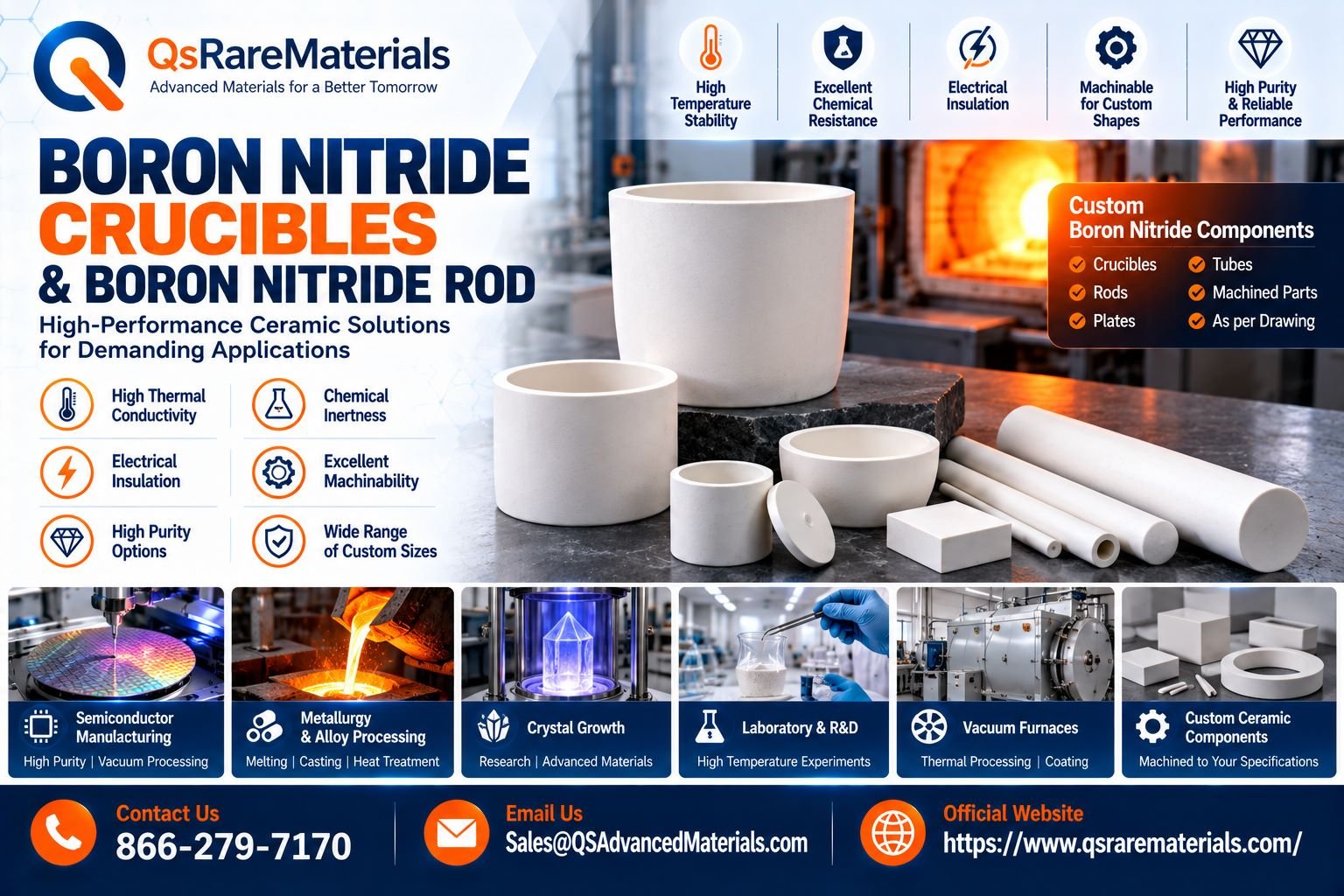
Unlike many conventional metal components, technical ceramics require careful handling because their mechanical characteristics can make them vulnerable to chipping, cracking, and other forms of damage.
Boron Nitride Crucibles are used in selected thermal processing applications where material compatibility, purity, and component integrity are important.
Meanwhile, a Boron Nitride Rod provides specialised ceramic stock for manufacturing insulating elements, supports, spacers, and precision engineering components.
Although these products perform different functions, both require appropriate packaging, handling, and quality verification.
For research laboratories, equipment manufacturers, and industrial procurement teams, effective ceramic supply chain management can help reduce avoidable damage and improve manufacturing consistency.
Why Technical Ceramic Supply Chains Require Special Attention
Technical ceramics are selected for properties that may be difficult to obtain from conventional engineering materials.
However, excellent thermal or electrical characteristics do not necessarily mean that a ceramic component can withstand rough mechanical handling.
Chipping, cracks, and surface contamination may affect suitability for sensitive applications.
Transporting ceramic components therefore requires packaging that accounts for geometry, weight, and mechanical vulnerability.
Appropriate supplier communication and incoming inspection help establish clear expectations for component quality.
Understanding Boron Nitride Crucibles
Boron Nitride Crucibles are specialised ceramic containers manufactured from suitable boron nitride materials.
Depending on their grade and construction, they may be used in selected high-temperature research, vacuum processing, and advanced material manufacturing applications.
Their performance depends on chemical compatibility, operating atmosphere, temperature, and component geometry.
Crucibles may contain relatively thin walls, shaped openings, or other features requiring careful handling.
Even minor damage can be important when the component must contain valuable experimental materials.
Buyers should therefore verify dimensional accuracy and structural condition before approving crucibles for use.
What Is a Boron Nitride Rod?
A Boron Nitride Rod is a solid ceramic component that may be used directly or machined into application-specific parts.
Depending on its material grade, it can support the manufacture of insulation components, locating elements, spacers, and technical fixtures.
The rod’s dimensions and material properties must match the intended application.
Long or relatively thin rods can require additional support during transportation and handling.
Because boron nitride ceramics are generally brittle, excessive bending forces or impacts can cause damage.
Proper packaging and inspection help protect the supplied material.
Why Packaging Design Matters
Technical ceramic packaging should minimise unnecessary movement and protect components from mechanical contact.
A crucible may require support around suitable exterior surfaces rather than concentrated pressure on delicate edges.
Ceramic rods may need individual separation to prevent contact damage.
Packaging materials should also be compatible with applicable cleanliness requirements.
Loose particles, fibres, or unsuitable protective materials may introduce contamination concerns for sensitive applications.
Suppliers and buyers should agree on relevant packing requirements before shipment.
Comparing Handling Requirements
| Evaluation Factor | Boron Nitride Crucibles | Boron Nitride Rod |
| Product Geometry | Hollow ceramic container | Solid cylindrical component |
| Common Damage Risk | Chipped rims and cracked walls | Edge damage and fracture |
| Packaging Priority | Support without concentrated pressure | Separation and suitable support |
| Inspection Focus | Surface integrity and dimensions | Straightness, dimensions and cracks |
| Storage Consideration | Protect internal cavity | Prevent bending loads and contact damage |
| Application Review | Containment suitability | Machining and fixture suitability |
Different designs may require additional precautions based on their dimensions and material grades.
Incoming Quality Inspection
Receiving inspection helps identify potential problems before ceramic components enter laboratory or manufacturing equipment.
A suitable inspection procedure may include verifying product identification, dimensions, quantity, and visible condition.
Crucibles should be examined for chipped edges, damaged surfaces, and signs of cracking.
Rods should be checked against relevant dimensional requirements and inspected for damage.
For critical applications, visual examination alone may be insufficient.
Additional inspection methods should be selected according to component specifications and the consequences of failure.
Material Identification and Documentation
Different boron nitride grades can have different purity levels, densities, additives, and mechanical characteristics.
Products that appear similar may not provide identical performance.
Procurement teams should therefore request relevant technical specifications and maintain clear material identification.
Documentation may include product dimensions, grade information, inspection records, and applicable material characteristics.
Where required, traceability can link supplied components with purchasing and quality-control records.
Accurate identification helps reduce the possibility of selecting an unsuitable ceramic grade.
Storage Practices for Technical Ceramics
Appropriate storage helps maintain ceramic component condition before use.
Components should be protected from accidental impacts, excessive mechanical loading, and contamination.
Crucibles may benefit from individual protective arrangements that prevent damage to their openings and walls.
Rods should be stored with suitable support according to their dimensions.
For high-purity applications, clean storage conditions may also be important.
Storage procedures should reflect the selected grade and the requirements of the intended application.
Why Custom Dimensions Need Careful Verification
Research facilities and industrial equipment manufacturers may require ceramic components with specialised dimensions.
A custom crucible might have a particular wall thickness or internal cavity geometry.
A rod may require machining allowances or precise dimensional tolerances.
These requirements should be communicated through approved drawings and relevant specifications.
Before procurement, buyers should confirm that the proposed geometry is practical for the selected material.
Customisation should not compromise structural integrity or intended component performance.
Reducing Procurement Problems Through Supplier Communication
Ceramic procurement involves coordination between engineering teams, purchasing departments, and material suppliers.
Clear communication can reduce misunderstandings concerning material grades, dimensions, packaging, and inspection requirements.
Businesses should establish acceptance criteria before placing orders.
For demanding applications, representative samples may help verify suitability.
Technical discussions should also cover operating conditions and any specialised handling requirements.
A reliable procurement process focuses on application compatibility rather than selecting components solely by price.
A Practical Ceramic Procurement Checklist
Industrial buyers can evaluate the following requirements:
- Material Grade: Confirm composition and applicable properties.
- Dimensional Accuracy: Verify component drawings and tolerances.
- Packaging Protection: Review suitable arrangements for fragile components.
- Surface Condition: Establish inspection and cleanliness requirements.
- Documentation: Request appropriate material and quality information.
- Application Compatibility: Confirm thermal, mechanical, and chemical suitability.
These measures support consistent purchasing and more effective technical evaluation.
Frequently Asked Questions (FAQs)
1. What are Boron Nitride Crucibles used for?
Boron nitride crucibles are specialised ceramic containers used in selected thermal processing, laboratory research, and advanced materials manufacturing applications.
2. What is a Boron Nitride Rod?
A boron nitride rod is a solid technical ceramic component that may be machined into supports, spacers, insulating elements, and customised engineering parts.
3. Why do boron nitride ceramics need careful packaging?
Their relatively brittle mechanical behaviour makes them vulnerable to damage from impacts, concentrated pressure, and unsuitable handling.
4. Can boron nitride ceramic components be customised?
Yes. Suitable ceramic grades can be manufactured or machined into specialised dimensions, subject to production capabilities and design limitations.
5. What should buyers inspect before using boron nitride components?
Buyers should verify material identification, dimensions, visible condition, appropriate documentation, and compatibility with intended operating requirements.
Media Contact
Department: Technical Ceramics and Advanced Materials Enquiries
Phone: 866-279-7170
Email: Sales@QSAdvancedMaterials.com
Official Website: https://www.qsrarematerials.com/