
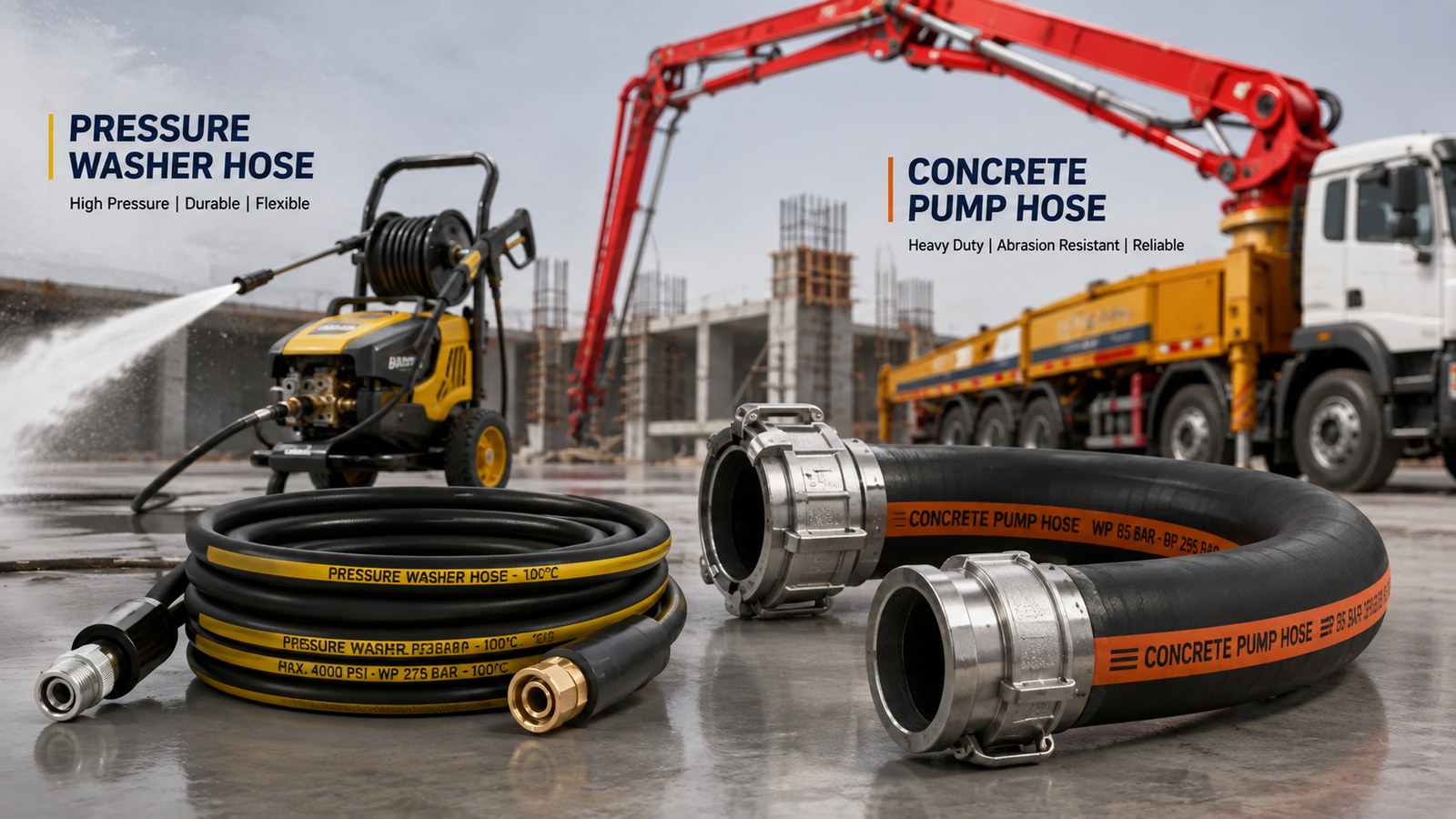
Two important examples are the Pressure Washer Hose and Concrete Pump Hose. Although both are designed to handle demanding working conditions, they serve very different purposes and require different materials, reinforcement structures, pressure ratings, and maintenance practices.
A Pressure Washer Hose carries high-pressure water between a pressure washing machine and the spray gun. A Concrete Pump Hose, on the other hand, transports abrasive concrete mixtures from pumping equipment to the placement area. Selecting the correct hose for either application helps reduce downtime, minimise safety risks, and improve overall equipment efficiency.
What Is a Pressure Washer Hose?
A Pressure Washer Hose is a specially reinforced flexible hose engineered to transport water at high pressure. It is widely used in commercial cleaning, vehicle washing, industrial maintenance, construction sites, agriculture, and professional cleaning operations.
Unlike an ordinary garden hose, a pressure washing hose must withstand continuous pressure, sudden pressure fluctuations, bending, abrasion, heat, and repeated movement.
Its construction generally includes:
- A durable inner tube for carrying water
- One or more reinforcement layers
- Steel wire braid or textile reinforcement
- A protective abrasion-resistant outer cover
- High-pressure couplings or fittings
Professional-grade hoses are designed to remain flexible while maintaining structural strength under demanding working conditions.
Key Features of a Quality Pressure Washer Hose
The effectiveness of pressure washing equipment depends heavily on hose quality. Choosing the wrong specification can result in pressure loss, premature wear, leakage, or even hose failure.
Important characteristics include:
Working pressure: The hose pressure rating should meet or exceed the maximum operating pressure of the washer.
Temperature resistance: Hot-water pressure washers require hoses specifically designed for elevated temperatures.
Abrasion resistance: The outer cover should withstand dragging across concrete, workshops, roads, and industrial floors.
Flexibility: A flexible Pressure Washer Hose makes movement easier and reduces operator fatigue.
Kink resistance: Reinforced construction helps maintain uninterrupted water flow when the hose is moved or bent.
Common Applications of Pressure Washer Hoses
Pressure washer hoses support a wide range of professional applications, including:
- Vehicle and fleet cleaning
- Industrial machinery maintenance
- Factory floor cleaning
- Building exterior washing
- Agricultural equipment cleaning
- Construction equipment maintenance
- Driveway and pavement cleaning
- Commercial cleaning services
Choosing the proper length and internal diameter also helps maintain efficient pressure delivery across the cleaning system.
What Is a Concrete Pump Hose?
A Concrete Pump Hose is a heavy-duty industrial hose used for transferring wet concrete, cement-based mixtures, grout, and similar abrasive materials.
Concrete pumping environments are extremely demanding. The hose must withstand not only high operating pressure but also continuous internal abrasion caused by sand, cement, aggregates, and other materials passing through the hose.
A typical Concrete Pump Hose contains:
- Highly abrasion-resistant inner rubber
- Multiple reinforcement layers
- High-strength steel wire
- Weather-resistant outer rubber
- Heavy-duty hose ends and couplings
This specialised construction allows the hose to withstand repeated pumping cycles while maintaining flexibility around construction areas.
Why Concrete Pump Hose Quality Matters
Concrete delivery places substantial mechanical stress on hoses. Poor-quality products can wear internally, become damaged externally, or fail under pressure.
A reliable Concrete Pump Hose offers several important advantages:
- High resistance to internal abrasion
- Strong pressure-handling capability
- Improved flexibility during concrete placement
- Resistance to construction-site wear
- Secure connection with pumping equipment
- Longer service life when maintained correctly
Because concrete hose failure can create serious operational and safety hazards, hoses should always be inspected before pumping begins.
Pressure Washer Hose vs Concrete Pump Hose
| Feature | Pressure Washer Hose | Concrete Pump Hose |
| Main Material Transported | High-pressure water | Concrete, grout and cement mixtures |
| Primary Challenge | Water pressure and external abrasion | Pressure and severe internal abrasion |
| Reinforcement | Textile or steel wire | Heavy-duty steel wire reinforcement |
| Flexibility | High | Heavy-duty flexibility |
| Common Industries | Cleaning, automotive, manufacturing | Construction and infrastructure |
| Inner Tube Requirement | Water and temperature resistance | Exceptional abrasion resistance |
| Typical Equipment | Pressure washers | Concrete pumps |
Both hoses need reliable pressure resistance, but their internal construction is designed around completely different operating media.
How to Choose the Right Pressure Washer Hose
Before purchasing a Pressure Washer Hose, check your equipment specifications carefully.
Consider:
- Maximum working pressure
- Burst pressure
- Water temperature
- Hose diameter
- Required hose length
- Connection thread or coupling
- Chemical compatibility if detergents are used
- Abrasion resistance
- Bend radius
Never select a hose based only on appearance or price. Compatibility with the pressure washer system is essential for safe operation.
How to Select the Right Concrete Pump Hose
Choosing a Concrete Pump Hose requires careful evaluation of the pumping application.
Important factors include:
- Maximum pump pressure
- Concrete mixture characteristics
- Aggregate size
- Hose internal diameter
- Hose length
- Reinforcement structure
- Required bend flexibility
- Coupling compatibility
- Abrasion resistance
The inner tube is especially important because concrete can cause continuous wear during pumping.
Hose Safety and Maintenance Tips
Proper maintenance increases hose life and reduces unexpected equipment failure.
Operators should:
- Inspect the hose before every operation.
- Check for cracks, cuts, exposed reinforcement, bulges, or damaged fittings.
- Avoid dragging hoses across sharp surfaces whenever possible.
- Never exceed the manufacturer’s rated working pressure.
- Prevent excessive twisting or sharp bending.
- Flush hoses properly after operation.
- Store hoses away from direct sunlight, extreme heat, and chemicals.
- Replace visibly damaged hoses rather than attempting unsafe temporary repairs.
For a Concrete Pump Hose, proper cleaning after pumping is particularly important because hardened concrete can damage the hose and restrict material flow.
Signs That an Industrial Hose Needs Replacement
Even premium hoses eventually wear out. Replacement may be necessary when you notice:
- Cracking on the outer surface
- Exposed reinforcement wire
- Hose swelling or deformation
- Leakage around fittings
- Severe abrasion
- Reduced flexibility
- Damaged couplings
- Unusual vibration during operation
Regular inspection is far less expensive than unexpected equipment downtime or workplace accidents.
Frequently Asked Questions
1. What is a Pressure Washer Hose used for?
A Pressure Washer Hose transfers pressurised water from the pressure washer unit to the spray gun for industrial, commercial, and domestic cleaning applications.
2. Can a normal water hose be used with a pressure washer?
Not on the high-pressure outlet side. Standard hoses are generally not designed to withstand the pressure generated by professional pressure washers.
3. How do I choose the correct pressure washer hose pressure rating?
Select a hose with a working pressure rating equal to or greater than the maximum pressure generated by your equipment.
4. What is a Concrete Pump Hose used for?
A Concrete Pump Hose transports wet concrete, grout, mortar, and related construction materials from concrete pumping machinery to the required placement location.
5. Why does concrete hose need abrasion resistance?
Concrete contains cement, sand, aggregates, and other abrasive components that continuously rub against the inner hose surface during pumping.
6. Can Pressure Washer Hose handle hot water?
Only if the particular hose is rated for the operating temperature of the hot-water pressure washer.
7. How often should industrial hoses be inspected?
They should ideally be visually inspected before every use, with additional scheduled inspections depending on workload and operating conditions.
8. What causes premature concrete pump hose failure?
Common causes include internal abrasion, excessive pressure, improper bending, damaged couplings, external impact, poor storage, and incorrect hose selection.
9. Does hose diameter affect performance?
Yes. Incorrect internal diameter can influence pressure, flow rate, pumping efficiency, and equipment performance.
10. How can hose service life be increased?
Using the correct pressure rating, preventing sharp bends, performing regular inspections, cleaning after operation, and storing hoses correctly can extend their usable life.