
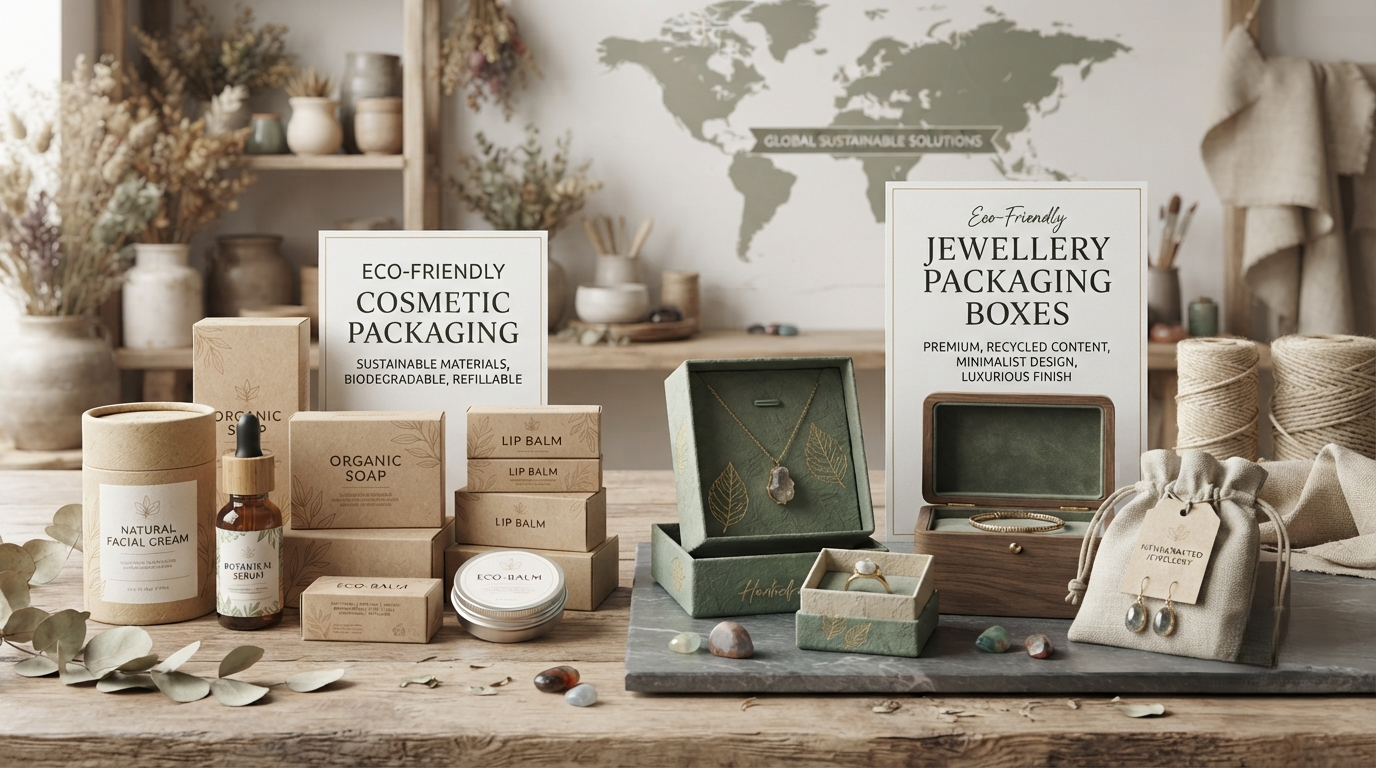
The packaging industry is witnessing a significant transformation as sustainability becomes an increasingly important consideration for cosmetic and jewellery brands. The growing adoption of eco friendly cosmetic packaging and modern jewellery packaging boxes reflects a broader movement toward packaging solutions that combine visual appeal, product protection, functionality, and responsible material use.
For many years, packaging was primarily evaluated according to its appearance, strength, convenience, and manufacturing cost. Today, businesses are increasingly considering another important factor: the environmental impact of packaging throughout its lifecycle.
This shift is influencing how brands design, manufacture, promote, and deliver their products.
A New Chapter in the Packaging Industry
The history of packaging is closely connected with changes in consumer lifestyles and manufacturing technology. Earlier cosmetic products were commonly presented in glass containers, metal tins, paper cartons, and basic plastic packaging.
As mass production expanded, plastic became increasingly popular because it offered manufacturers flexibility, durability, and relatively low production costs. Cosmetic packaging consequently became more diverse, with bottles, tubes, jars, pumps, caps, cartons, and decorative components available in countless designs.
Jewellery packaging developed around a different concept. Because jewellery has traditionally represented luxury and gifting, packaging focused heavily on presentation. Wooden cases, velvet interiors, leather-style coverings, rigid boxes, and decorative finishes were widely used to create a premium unboxing experience.
These approaches served the industries well, but environmental expectations have changed the packaging conversation.
Sustainability Changes Consumer Expectations
The modern customer is increasingly interested in more than the product inside a package. Packaging material, design, recyclability, reusability, and unnecessary waste can influence purchasing decisions.
As a result, brands are exploring packaging solutions that can reduce material consumption while maintaining product quality.
This has accelerated interest in:
- Recycled paper and paperboard
- Kraft packaging
- Reusable boxes
- Refillable containers
- Glass and aluminum formats
- Molded fiber components
- Renewable materials
- Lightweight packaging structures
The objective is not simply to use a material labeled “green.” Sustainable packaging requires consideration of sourcing, manufacturing, transportation, product protection, consumer use, and end-of-life management.
Cosmetic Packaging Moves Beyond Conventional Plastic
The cosmetics sector is experiencing some of the most visible packaging changes. Modern eco friendly cosmetic packaging is being developed to meet the practical requirements of beauty products while reducing unnecessary environmental impact.
Cosmetic packaging must still perform important functions. It may need to protect products from moisture, air, contamination, light, or physical damage.
This means sustainability must be balanced with functionality.
For secondary packaging, recycled paperboard and kraft-based cartons can provide branding space while potentially reducing dependence on virgin materials. Glass and aluminum can provide durable alternatives for selected product formats, while refill systems can extend the life of primary containers.
Jewellery Packaging Reinvents the Meaning of Luxury
The jewellery industry is also entering a new packaging era.
Modern jewellery packaging boxes are increasingly being designed with sustainability in mind without sacrificing the sense of exclusivity customers expect.
Instead of relying solely on elaborate materials, brands can create luxury through:
- High-quality paper textures
- Precise box construction
- Elegant printing
- Embossed brand details
- Custom-shaped inserts
- Reusable box structures
- Minimal but sophisticated designs
This approach demonstrates that luxury and sustainability do not have to compete. With thoughtful engineering and design, they can complement each other.
Reusability Could Become a Major Packaging Trend
One of the strongest opportunities for the future is reusable packaging.
A jewellery box that becomes a storage case after purchase has a longer useful life than a box designed only for transportation and presentation.
The same principle can be applied to cosmetics. Durable cosmetic containers can potentially be combined with refill systems, allowing customers to replace the contents while keeping the original container.
Such approaches can change the relationship between consumers and packaging.
Instead of viewing a package as something temporary, customers may begin viewing it as part of the product itself.
Technology Adds a New Dimension
Sustainable packaging is not limited to physical materials. Digital technology is also expected to influence the next generation of packaging.
QR codes and NFC technology can connect physical packaging with digital experiences. A jewellery customer could potentially access authenticity information, product certificates, care instructions, or collection details.
Cosmetic brands could use digital connections to provide ingredient information, product tutorials, recycling guidance, or brand stories.
This can make packaging more informative without requiring extensive printed content.
What the Future Packaging Market Could Look Like
The future of packaging is expected to focus increasingly on circularity. Instead of following a simple “produce, sell, dispose” model, businesses are exploring systems designed around reuse, refill, recovery, and recycling.
Future eco friendly cosmetic packaging may feature:
- More refillable product systems
- Increased recycled content
- Lightweight designs
- Recyclable mono-material structures
- Improved material traceability
- Smart labels
- Reusable delivery packaging
Meanwhile, jewellery packaging boxes may become more customizable, durable, reusable, and digitally connected.
Sustainability Meets Personalization
Personalization is another area expected to grow.
Digital printing technologies can support customized packaging for limited collections, festivals, seasonal campaigns, wedding jewellery, premium launches, and special customer orders.
This gives brands more creative flexibility while potentially reducing the need for extremely large standardized packaging inventories.
A Shift From Excess to Purpose
The future of packaging may also involve a simpler definition of premium design.
In previous decades, luxury packaging could involve multiple layers, heavy structures, decorative materials, and elaborate finishing.
Tomorrow’s luxury may be defined differently.
A beautifully constructed box that uses carefully selected materials, performs a useful function, and can be reused may create a stronger impression than packaging filled with unnecessary elements.
Why Businesses Are Paying Attention
For brands, packaging represents more than a container. It is a communication tool that reaches customers at one of the most important moments—the moment they receive and open the product.
Thoughtful packaging can help communicate:
- Product quality
- Brand personality
- Environmental responsibility
- Attention to detail
- Premium positioning
- Customer-focused design
However, businesses should ensure that sustainability claims are transparent and supported by genuine material and manufacturing choices.
Frequently Asked Questions
What is eco friendly cosmetic packaging?
It is packaging designed to reduce environmental impact through material efficiency, recyclability, reuse, refillability, renewable resources, or other responsible design approaches.
Why are brands moving toward sustainable packaging?
Changing customer expectations, environmental concerns, waste reduction goals, and brand positioning are encouraging businesses to reconsider conventional packaging.
What materials can be used for cosmetic packaging?
Depending on the product, businesses can consider recycled paperboard, kraft paper, glass, aluminum, bamboo, molded fiber, and suitable recycled materials.
What makes jewellery packaging different?
Jewellery packaging must protect valuable products while also creating a premium presentation that reflects the quality of the jewellery.
Are jewellery packaging boxes reusable?
Yes. They can be designed for continued jewellery storage after the original purchase.
Can sustainable packaging support luxury branding?
Yes. Premium construction, refined finishes, embossing, quality papers, custom inserts, and elegant design can create a luxury experience.
What is refillable packaging?
Refillable packaging allows customers to retain a durable container and replace the product inside instead of purchasing a completely new package.
Does sustainable packaging always cost less?
No. Costs depend on materials, construction, production volume, printing, customization, and manufacturing processes.
What technology can be used in smart packaging?
QR codes, NFC features, digital identification, and connected product information are examples of technologies that can enhance packaging.
What is the future of sustainable packaging?
The future is likely to focus on reuse, refill systems, recyclable materials, lightweight construction, personalization, digital integration, and circular product systems.