
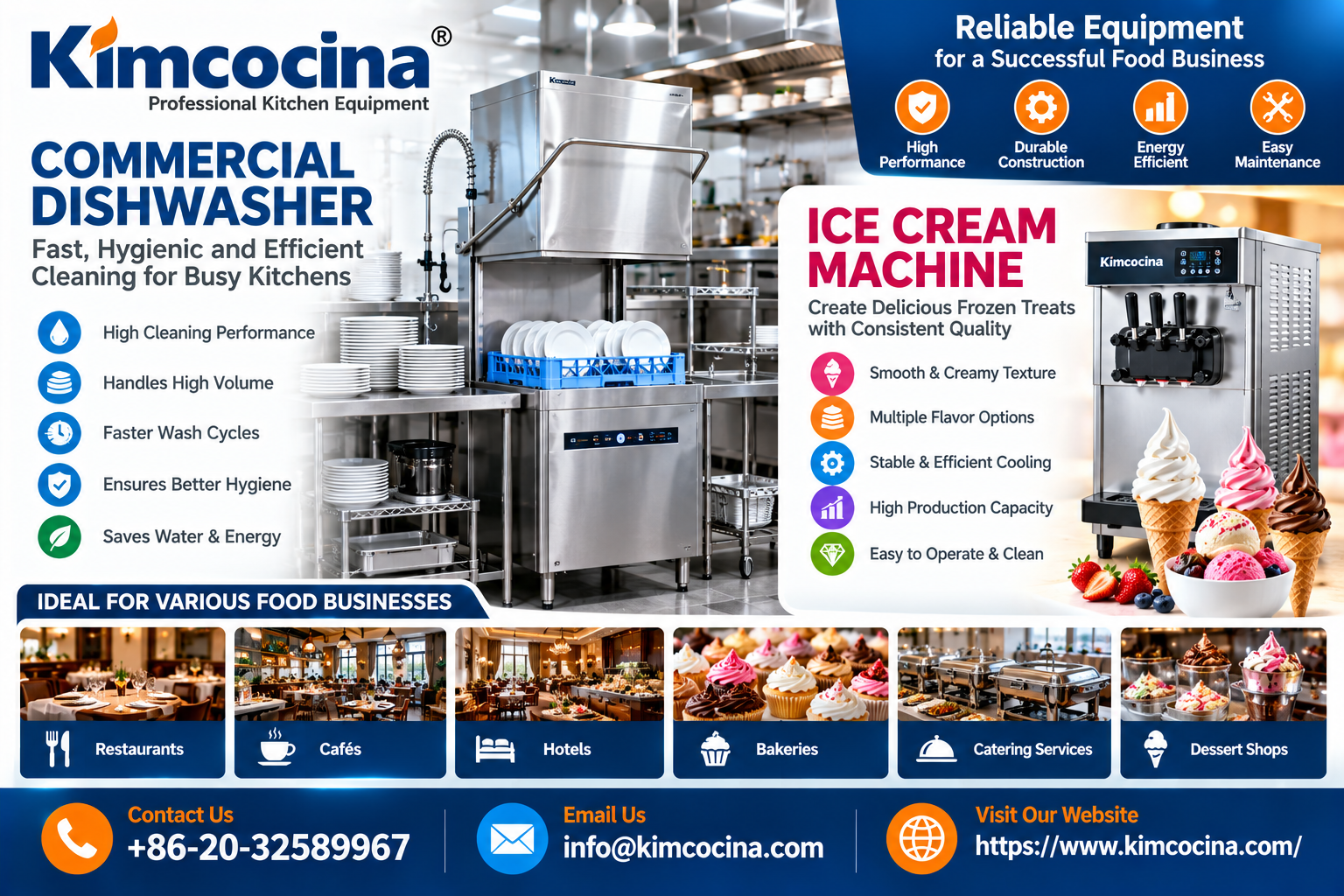
Restaurants, cafés, hotels, bakeries, and dessert businesses are placing greater emphasis on kitchen efficiency, equipment hygiene, and consistent food quality as commercial food preparation becomes increasingly demanding.
A professional Commercial Dishwasher plays an essential role in maintaining clean tableware, kitchen utensils, and foodservice equipment while supporting organized cleaning operations. Meanwhile, an ice cream machine helps hospitality businesses prepare frozen desserts with consistent texture, controlled portions, and suitable production capacity.
Although these machines perform different functions, both contribute to smooth foodservice operations, customer satisfaction, and kitchen productivity.
For restaurant operators and hospitality investors, selecting compatible commercial kitchen equipment is an important part of building efficient and hygienic food preparation environments.
Why Equipment Coordination Matters in Commercial Kitchens
Commercial kitchens depend on several interconnected activities, including ingredient preparation, cooking, cleaning, storage, and customer service.
Poor equipment planning can create workflow interruptions, sanitation concerns, and unnecessary operational expenses.
A busy restaurant may require continuous dishwashing capacity, while a dessert outlet needs dependable frozen dessert production.
Understanding operational requirements helps businesses invest in machinery that supports their actual service needs.
What Is a Commercial Dishwasher?
A Commercial Dishwasher is specialized equipment designed to clean dishes, glasses, utensils, and suitable kitchen accessories in professional foodservice environments.
Unlike most domestic dishwashers, commercial models are engineered for repetitive operating cycles and demanding service conditions.
Important Features
- High Cleaning Capacity: Supports frequent washing requirements.
- Specialized Wash Programs: Accommodates suitable kitchenware.
- Temperature Controls: Help maintain specified cleaning and sanitizing conditions.
- Durable Construction: Supports commercial operating environments.
- Water Management: Helps regulate water usage according to equipment design.
- Organized Cleaning: Reduces dependence on repetitive manual dishwashing.
Actual cleaning and sanitizing performance depends on equipment specifications, correct operation, approved chemicals, and applicable hygiene requirements.
Understanding Ice Cream Machines in Foodservice
An ice cream machine is commercial equipment used to prepare frozen desserts through controlled mixing, freezing, and dispensing processes.
Different models support soft-serve ice cream, batch-frozen products, and other suitable dessert applications.
Common Machine Categories
Soft-Serve Machines: Produce soft frozen desserts through controlled freezing and dispensing.
Batch Freezers: Process prepared dessert mixtures into frozen products in individual batches.
Countertop Models: Suit operations with limited available space and compatible production requirements.
Floor-Standing Models: May provide greater production capacity for suitable commercial applications.
Businesses should consider product type, serving requirements, cleaning procedures, and available installation space before selecting equipment.
Commercial Dishwasher and Ice Cream Machine: Different Roles, Shared Goals
Both machines contribute to foodservice performance, although their operational purposes differ.
| Feature | Commercial Dishwasher | Ice Cream Machine |
| Primary function | Cleaning kitchenware | Producing frozen desserts |
| Main application | Restaurants and foodservice cleaning areas | Dessert shops, cafés, and restaurants |
| Important requirement | Effective cleaning and sanitizing | Controlled freezing and product consistency |
| Maintenance focus | Filters, spray systems, and cleaning components | Freezing systems, seals, and product-contact surfaces |
| Operational benefit | Organized kitchen cleaning | Consistent dessert preparation |
Choosing equipment according to service requirements can improve kitchen organization and customer experience.
The Importance of Kitchen Hygiene and Food Safety
Food safety is a fundamental consideration in commercial kitchen operations.
Dirty utensils, poorly maintained machinery, and inappropriate cleaning procedures can increase contamination risks.
A properly operated Commercial Dishwasher can support food-contact item cleaning when used according to its specifications and applicable sanitation standards.
Frozen dessert equipment requires careful attention because product-contact surfaces may retain dairy ingredients, sugars, and other food residues.
Operators should follow manufacturer-approved cleaning procedures and applicable food safety requirements.
Importantly, not every removable ice cream machine component is suitable for dishwasher cleaning. Compatibility must be verified before machine washing.
How Equipment Capacity Affects Business Performance
Selecting commercial kitchen machinery involves matching production capabilities with customer demand.
An undersized dishwasher may create delays in returning clean tableware to service.
Similarly, a dessert outlet using an unsuitable ice cream machine may experience limited production capacity or inconsistent product availability.
Important Capacity Considerations
- Expected customer demand.
- Number of dishes and utensils requiring cleaning.
- Frozen dessert serving requirements.
- Available kitchen space.
- Electrical and water connections.
- Equipment maintenance needs.
- Staff training requirements.
Capacity planning helps businesses avoid unnecessary equipment expenditure and operational bottlenecks.
Energy Efficiency and Resource Management
Commercial foodservice equipment consumes electricity, water, and other operational resources.
Equipment selection should therefore consider efficiency alongside purchasing cost.
Modern dishwashing systems may incorporate water-saving designs, suitable wash-cycle controls, and improved thermal management.
Frozen dessert machines can include temperature regulation and energy-management features depending on their design.
However, actual efficiency depends on equipment configuration, workload, installation, and operating practices.
Businesses should compare documented technical specifications instead of relying exclusively on promotional efficiency claims.
Creating an Organized Commercial Kitchen Layout
Kitchen layout influences staff movement, equipment accessibility, and cleaning efficiency.
Dishwashing areas should be organized to separate dirty items from cleaned kitchenware and minimize cross-contamination.
Frozen dessert preparation areas should provide suitable space for ingredients, dispensing operations, and equipment cleaning.
Practical Layout Considerations
- Provide adequate equipment ventilation.
- Maintain accessible cleaning areas.
- Separate incompatible food preparation and washing activities.
- Ensure suitable electrical and plumbing arrangements.
- Allow safe access for maintenance.
- Follow relevant sanitation and workplace safety requirements.
A carefully planned layout supports safer and more productive foodservice operations.
Maintenance Practices That Support Equipment Reliability
Both commercial dishwashers and frozen dessert machines require routine inspection and appropriate maintenance.
For dishwashing equipment, maintenance may involve cleaning filters, checking spray arms, and verifying chemical dosing systems.
For an ice cream machine, operators should follow approved procedures for cleaning product-contact surfaces, inspecting seals, and maintaining freezing components.
Preventive maintenance can help identify problems before they cause serious equipment interruptions.
Staff should also understand operating instructions and report unusual equipment behavior promptly.
Choosing the Right Commercial Kitchen Equipment Supplier
Hospitality businesses should evaluate suppliers according to equipment suitability, technical specifications, maintenance support, and product documentation.
A dependable supplier should provide clear information about installation requirements, machine capacity, operating procedures, and warranty conditions.
Businesses should also consider spare-part availability and the accessibility of qualified technical support.
Purchasing decisions should reflect the complete operating cost rather than the initial equipment price alone.
Frequently Asked Questions (FAQs)
1. What is a Commercial Dishwasher?
A commercial dishwasher is specialized equipment designed to clean dishes, utensils, and compatible kitchenware in professional foodservice environments.
2. What is an ice cream machine used for?
An ice cream machine prepares frozen desserts by mixing, freezing, and dispensing suitable ingredients according to its equipment design.
3. Can commercial dishwashers clean ice cream machine components?
Certain removable components may be dishwasher-compatible, but operators must follow the equipment manufacturer’s cleaning instructions.
4. How should restaurants select commercial kitchen equipment?
Restaurants should evaluate production capacity, equipment dimensions, cleaning requirements, energy consumption, installation needs, and maintenance support.
5. Why is regular maintenance important for foodservice machines?
Appropriate maintenance supports equipment performance, hygiene, operational consistency, and early identification of mechanical problems.
Media Contact
Department: Commercial Kitchen Equipment and Foodservice Machinery Enquiries
Email: info@kimcocina.com
Contact: +86-20-32589967
Official Website: https://www.kimcocina.com/