
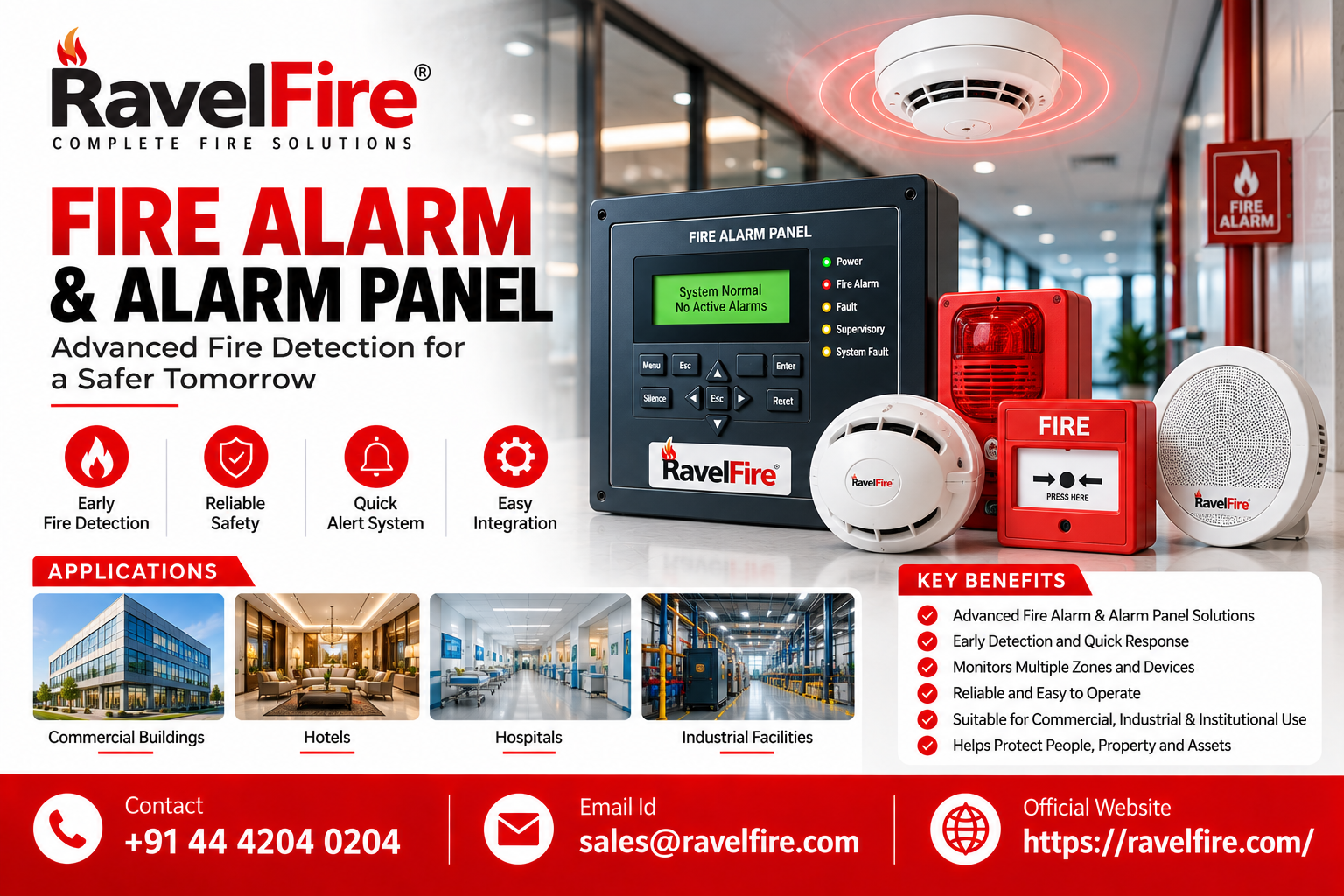
Growing attention to workplace safety, commercial infrastructure, and industrial risk management is increasing the importance of reliable fire detection and emergency warning systems.
A properly designed fire alarm system helps identify potential fire conditions and alert occupants before an incident develops further. At the center of many installations, an alarm panel monitors connected detection devices, processes signals, and coordinates emergency notification functions.
For building owners, safety consultants, industrial operators, and contractors, understanding these technologies is essential for selecting suitable fire protection equipment.
What Is a Fire Alarm System?
A fire alarm system is a network of compatible devices designed to detect signs of fire and initiate appropriate warning signals.
Depending on the installation, the system may include smoke detectors, heat detectors, manual call points, sounders, visual notification devices, and control equipment.
When an automatic detector identifies conditions meeting its alarm criteria, the system can activate configured warning functions.
Common applications include:
- Commercial offices and business complexes.
- Hospitals and healthcare facilities.
- Manufacturing plants and industrial buildings.
- Hotels and hospitality establishments.
- Shopping malls and retail properties.
- Educational institutions.
- Warehouses and storage facilities.
Fire alarm equipment must be selected according to building hazards, applicable regulations, and approved system designs.
What Is an Alarm Panel?
An alarm panel, also called a fire alarm control panel, is the central monitoring and control unit of a compatible fire detection system.
It receives signals from connected devices and identifies specified alarm, fault, or supervisory conditions.
Depending on its configuration, the panel may activate notification appliances, display affected zones, record events, or communicate with approved monitoring equipment.
A correctly configured panel helps authorized personnel interpret system information and respond according to established emergency procedures.
However, a control panel does not independently detect smoke or heat unless suitable detection equipment is connected.
How Does a Fire Alarm System Work?
The operation of a typical fire detection installation involves several coordinated stages.
- Detection: A smoke or heat detector identifies conditions meeting its programmed alarm criteria.
- Signal Transmission: The detector communicates with the compatible control panel.
- Signal Processing: The panel identifies the relevant alarm information.
- Notification: Approved sounders, visual alarms, or other notification functions activate.
- Emergency Response: Occupants and authorized personnel follow the building’s emergency procedures.
The precise sequence depends on the approved installation.
Different Types of Fire Alarm Panels
Fire detection systems commonly use conventional or addressable control technology.
Conventional Fire Alarm Panels: These generally identify alarm conditions through designated detection zones.
Addressable Fire Alarm Panels: These communicate with compatible devices assigned individual addresses, allowing more detailed identification.
Networked Fire Alarm Panels: Certain approved systems connect multiple control units to support larger installations.
Each architecture serves different project requirements.
Conventional vs Addressable Alarm Panel
| Feature | Conventional Alarm Panel | Addressable Alarm Panel |
| Device identification | Usually zone-based | Individual compatible devices |
| Typical applications | Smaller or simpler installations | Larger or complex buildings |
| Fault information | Often identifies affected zones | May provide device-specific details |
| System configuration | Generally simpler | More configurable |
| Expansion | Model-dependent | Model-dependent |
Selection should follow the building’s safety assessment rather than cost considerations alone.
Why Fire Alarm Systems Matter in Commercial Buildings
Modern commercial buildings contain electrical equipment, furniture, storage materials, and other potential fire hazards.
A properly selected fire alarm system contributes to occupant safety by providing warning information when specified fire conditions are detected.
Hotels and hospitals may require carefully coordinated notification procedures because occupants have different mobility and assistance needs.
Industrial buildings may present additional challenges involving dust, heat, machinery, and complex layouts.
No single detection technology is appropriate for every environment.
Qualified professionals must evaluate each building’s fire hazards and operational requirements.
Important Features to Consider Before Purchasing
Businesses comparing fire alarm equipment should review several technical factors.
Detector Compatibility: Confirm that connected devices are approved for the proposed control equipment.
System Capacity: Evaluate supported zones, addresses, and expansion requirements.
Fault Monitoring: Review how equipment communicates wiring or device problems.
Power Supply: Confirm appropriate standby power arrangements.
Notification Compatibility: Check supported audible and visual alarm equipment.
Product Approvals: Verify relevant certifications and regulatory requirements.
Maintenance Support: Review available diagnostics, documentation, and replacement arrangements.
These considerations can help reduce installation complications and improve long-term system management.
Installation and Maintenance Best Practices
Professional installation is essential for reliable fire detection.
Detector placement, control panel configuration, wiring, and notification arrangements must follow applicable standards and approved drawings.
After installation, commissioning should verify the operation of connected devices and intended alarm functions.
Routine inspections should include prescribed functional testing, checking fault indications, evaluating power supplies, and examining detector condition.
Building owners should also review evacuation procedures and train appropriate personnel.
Maintenance records provide useful documentation of inspections, testing, and corrective actions.
How to Choose a Reliable Fire Alarm Equipment Supplier
Selecting a dependable supplier requires careful evaluation of product quality and technical support.
Important purchasing considerations include:
- Relevant product certifications and approvals.
- Detailed technical specifications.
- Compatibility with proposed detection systems.
- Availability of installation documentation.
- Warranty and replacement arrangements.
- Qualified technical assistance.
- Compliance with applicable fire safety requirements.
For large projects, contractors should request technical documentation before finalizing equipment procurement.
Frequently Asked Questions (FAQs)
1. What is a fire alarm system?
It is a system designed to detect specified fire conditions and provide warnings through compatible alarm equipment.
2. What is an alarm panel?
It is the central control unit responsible for monitoring connected fire detection devices and managing alarm signals.
3. What are the main components of a fire alarm?
Common components include smoke detectors, heat detectors, control panels, manual call points, and notification devices.
4. What is an addressable fire alarm panel?
It is a panel capable of identifying compatible connected devices through individual addresses.
5. What is a conventional alarm panel?
It is a control panel that generally identifies fire or fault conditions through designated detection zones.
6. Where are fire alarm systems commonly installed?
They are used in offices, hospitals, hotels, factories, schools, warehouses, and other buildings requiring fire protection.
7. Do fire alarm panels require backup power?
Applicable fire alarm designs typically require suitable standby power arrangements under relevant standards.
8. Can fire alarm systems connect to other building equipment?
Some systems support approved integration with monitoring and emergency management equipment.
9. How often should fire alarm systems be tested?
Testing schedules depend on applicable regulations, standards, manufacturer instructions, and the approved maintenance program.
10. How should businesses choose a fire alarm supplier?
Evaluate product certifications, technical compatibility, quality documentation, warranty support, and installation requirements.
Media Contact
Industry: Fire Safety, Fire Detection, Building Protection & Alarm Control Equipment
Service Enquiries: Fire Alarm, Alarm Panel, Smoke Detectors, Heat Detectors, Addressable Fire Alarm Systems & Fire Safety Accessories
Contact Number: +91 44 4204 0204
Email: sales@ravelfire.com
Official Website: https://ravelfire.com/