
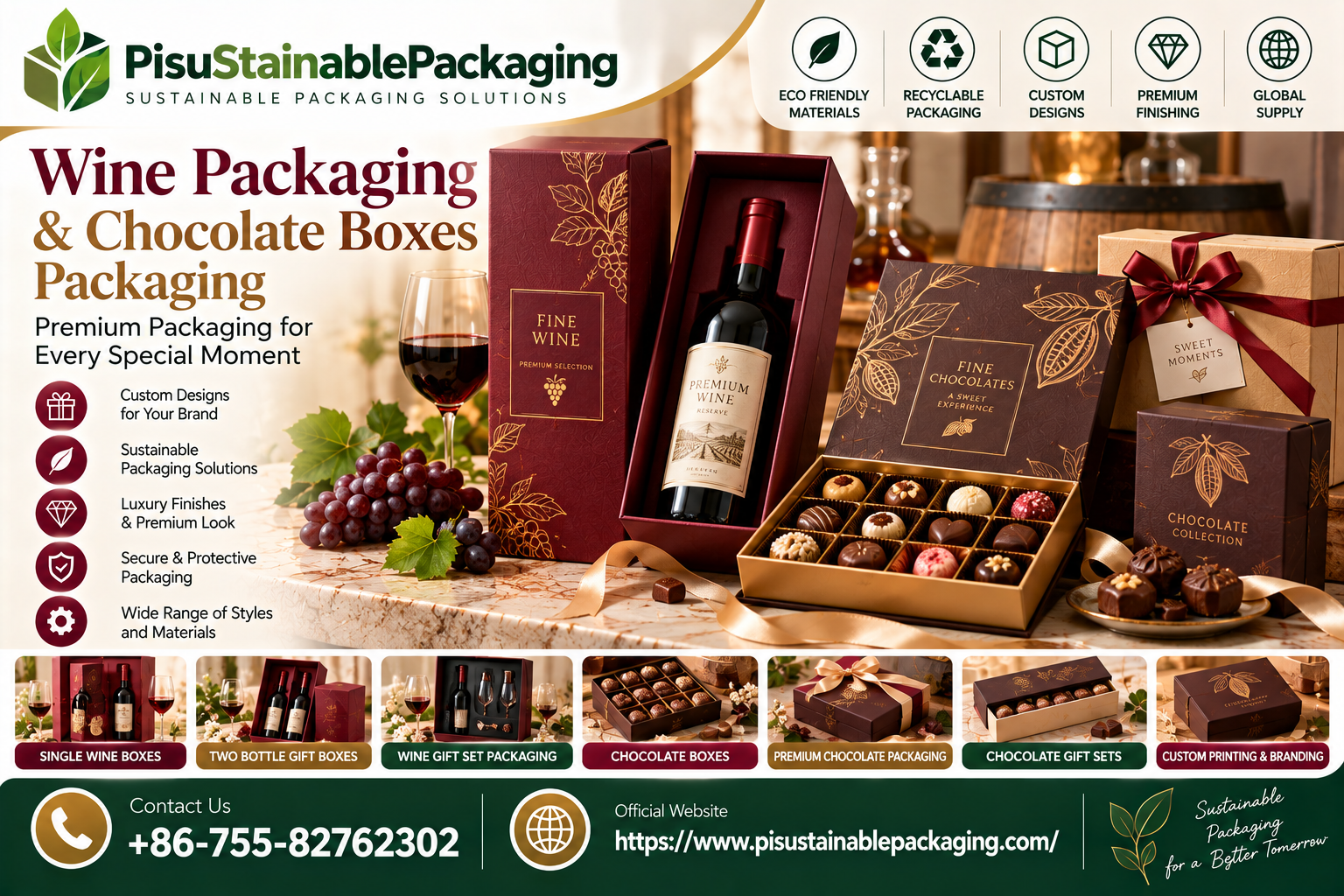
As premium food, beverage, gifting, hospitality, and retail brands compete for stronger shelf appeal and memorable customer experiences, demand for sophisticated wine packaging and high-quality chocolate boxes packaging continues to rise. Both categories require a careful balance of product protection, visual identity, premium presentation, transport performance, and increasingly, sustainable material choices.
Packaging is no longer viewed simply as a protective layer. For wine and confectionery brands, it has become an important part of storytelling, gifting, retail display, and customer perception.
Why Wine Packaging Matters
Wine is strongly associated with celebration, hospitality, gifting, and premium lifestyle experiences. Effective wine packaging needs to protect the bottle while also communicating the character of the product.
Packaging may be designed for:
- Single wine bottles
- Two-bottle gift sets
- Premium wine collections
- Corporate gifts
- Seasonal editions
- Winery presentation sets
- Retail promotions
A strong structure is especially important because glass bottles are relatively heavy and vulnerable to impact.
Types of Wine Packaging
Wine brands can choose from several packaging structures depending on positioning and distribution requirements.
Rigid Wine Boxes
Rigid boxes create a premium presentation and are commonly used for gifting and luxury bottles.
Folding Cartons
These can provide lightweight outer protection and branding for retail products.
Drawer Boxes
A sliding structure creates a premium reveal and works well for limited editions.
Magnetic Closure Boxes
These can offer a refined opening experience for high-value products.
Gift Carriers
Paperboard carriers with handles may be used for retail gifting and promotional packaging.
The correct format depends on bottle weight, dimensions, sales channel, and budget.
Wine Bottle Inserts Are Critical
A beautiful box is not enough if the bottle moves during transportation.
Custom inserts may help:
- Stabilize the bottle
- Protect the neck
- Separate multiple bottles
- Reduce impact
- Improve presentation
Possible materials include molded pulp, folded paperboard, and other appropriate structures.
For premium wine packaging, inserts should ideally be developed around actual bottle dimensions.
Branding Opportunities for Wine Boxes
Wine packaging gives brands a large surface for visual storytelling.
Customization may include:
- Logo printing
- Foil stamping
- Embossing
- Debossing
- Textured paper
- Custom colors
- Vintage-inspired graphics
- Minimal typography
A luxury winery may prefer understated design and premium materials, while a contemporary brand may use bold graphics and modern structures.
Sustainability in Wine Packaging
Sustainability is becoming increasingly important in beverage packaging.
Brands may consider:
- Recycled paperboard
- Recyclable structures
- Paper-based inserts
- Reduced plastic
- Lightweight box designs
- Reusable gift boxes
- Reduced lamination
Because wine bottles are heavy, packaging still needs enough structural strength to provide reliable protection.
Material reduction should therefore be balanced with performance.
What Is Chocolate Boxes Packaging?
Chocolate boxes packaging refers to packaging designed specifically for chocolates, truffles, pralines, confectionery assortments, and premium sweets.
It may include:
- Rigid gift boxes
- Folding cartons
- Drawer boxes
- Window boxes
- Multi-layer presentation boxes
- Seasonal gift packaging
- Corporate gift sets
The packaging must protect delicate products while creating an attractive presentation.
Why Chocolate Packaging Is Highly Visual
Chocolate is often purchased as a gift.
That means chocolate boxes packaging must communicate quality before the box is opened.
Premium boxes can help support:
Gifting Appeal
Elegant packaging can make a chocolate assortment feel ready for a special occasion.
Product Organization
Compartments and trays keep individual chocolates arranged neatly.
Brand Recognition
Colors, logos, patterns, and finishes can create a distinctive identity.
Perceived Value
A carefully designed presentation can enhance the perceived quality of the product.
Inserts and Trays for Chocolate Boxes
The internal structure of a chocolate box is extremely important.
Inserts can help:
- Separate individual pieces
- Protect decorative surfaces
- Maintain presentation
- Reduce movement
- Organize different flavors
Depending on product requirements, insert design may use food-suitable paper structures or other appropriate materials.
The number and shape of compartments should be based on the actual confectionery assortment.
Chocolate Packaging for Different Occasions
Chocolate boxes packaging can be customized for many occasions.
Popular applications include:
Weddings
Elegant boxes may be used as favors or premium gifts.
Valentine’s Day
Red, blush, gold, or romantic design themes are common.
Festivals
Seasonal artwork and gift structures can create limited-edition packaging.
Corporate Gifting
Logo customization and premium presentation can strengthen business gifting.
Birthdays and Anniversaries
Personalized boxes can make the product feel more special.
Luxury Finishes for Chocolate Packaging
Premium confectionery brands often use finishing techniques similar to luxury cosmetics or jewellery packaging.
Options may include:
- Metallic foil
- Embossed logos
- Debossed patterns
- Ribbons
- Textured papers
- Window cutouts
- Custom sleeves
The most effective design is usually one that complements the chocolates rather than competing with them visually.
Food Safety and Packaging Design
Chocolate packaging should consider food-contact requirements where the packaging or insert directly touches the product.
Brands should evaluate:
- Material suitability
- Odor transfer
- Moisture
- Grease resistance
- Clean production conditions
- Barrier requirements
Product-specific requirements should be confirmed during packaging development.
Wine Packaging vs Chocolate Boxes Packaging
Both categories are strongly associated with premium gifting, but their structural needs differ.
Wine packaging typically prioritizes:
- Weight support
- Bottle stability
- Impact protection
- Neck protection
Chocolate boxes packaging generally prioritizes:
- Product separation
- Surface protection
- Food suitability
- Elegant presentation
The best packaging supplier should understand these differences instead of using the same structure for every premium product.
Combining Wine and Chocolate in Gift Sets
Wine and chocolates are frequently paired for gifting.
A custom gift box can include dedicated compartments for:
- A wine bottle
- Chocolate assortments
- Greeting cards
- Accessories
- Branded inserts
This type of packaging is particularly popular for corporate gifts, holidays, weddings, and premium hospitality.
Careful structural design is essential because products with very different weights must remain secure in the same box.
E-Commerce Shipping Considerations
Both wine and chocolate may face demanding shipping conditions.
Packaging may need to handle:
- Impact
- Vibration
- Compression
- Multiple handling stages
- Temperature changes
The decorative retail box may therefore require additional protective shipping packaging.
Testing is particularly important before scaling an e-commerce packaging program.
Prototype Development Before Production
Prototypes allow brands to evaluate packaging before placing bulk orders.
A sample can confirm:
- Product fit
- Structural strength
- Insert design
- Opening experience
- Logo placement
- Print colors
- Finishing quality
- Overall presentation
For wine, brands should test the actual filled bottle wherever possible. For chocolates, sample products or accurate dimensions help verify compartment fit.
Frequently Asked Questions
What is wine packaging?
Wine packaging includes boxes, cartons, carriers, inserts, and gift structures designed to protect and present wine bottles.
Which boxes are popular for premium wine?
Rigid boxes, drawer boxes, magnetic boxes, and premium gift cartons are commonly used.
Can wine packaging be sustainable?
Yes. Recycled paperboard, paper-based inserts, reduced plastic, and reusable boxes are possible options.
Why are bottle inserts important?
They stabilize the bottle and help reduce movement and impact during handling.
What is chocolate boxes packaging?
Chocolate boxes packaging includes boxes, trays, compartments, and presentation structures designed for chocolates and confectionery products.
Can chocolate boxes be customized?
Yes. Size, structure, compartments, colors, printing, logos, and finishes can be customized.
Can packaging be designed for corporate gifting?
Yes. Both wine and chocolate boxes can include corporate branding and customized presentation.
Can wine and chocolates be packed in one box?
Yes. Custom gift structures can use separate compartments for wine, chocolates, and accessories.
Are prototypes recommended?
Yes. Prototyping helps verify product fit, structural performance, appearance, and insert design.
What information is needed for a quotation?
Useful details include product dimensions, weight, box style, quantity, materials, printing, finishing, insert requirements, and shipping destination.
Media Contact
Wine, Chocolate & Custom Packaging Enquiries
Contact: +86-755-82762302
Official Website: https://www.pisustainablepackaging.com/