
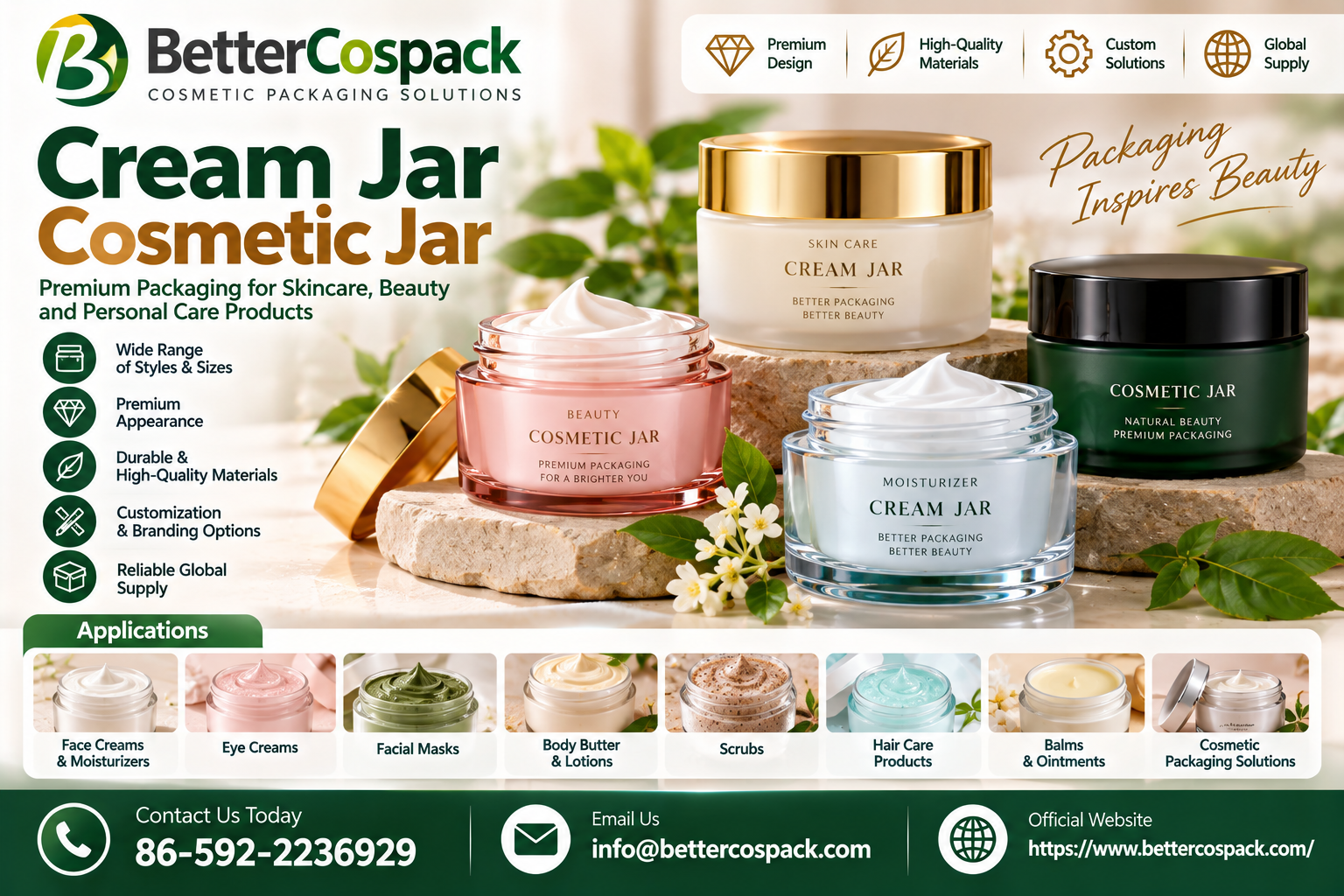
As skincare, personal-care, wellness, and cosmetic brands continue to compete through product quality and visual identity, packaging has become an increasingly important part of the customer experience. Demand for the cream jar and modern cosmetic jar formats is rising as brands look for packaging that combines protection, convenience, attractive presentation, and compatibility with a wide range of formulations.
From moisturizers and face creams to masks, body butters, balms, scrubs, and hair treatments, jars remain a popular choice because they offer practical access to the product while providing a large surface for decoration, branding, and premium finishes.
Why Cream Jar Packaging Remains Popular
A cream jar is widely used for medium- to high-viscosity skincare and personal-care products.
Common applications include:
- Face creams
- Moisturizers
- Night creams
- Eye creams
- Body butter
- Hair masks
- Facial masks
- Scrubs
- Balms
- Styling products
The wide-mouth design makes it easy for users to access thicker formulations that may not dispense efficiently through pumps or narrow-neck bottles.
For brands, the jar format also offers flexibility in size, material, color, decoration, and lid design.
What Is a Cosmetic Jar?
A cosmetic jar is a container specifically designed for beauty, skincare, haircare, personal-care, or wellness formulations.
It can be produced using materials such as:
- Glass
- PET
- PP
- Acrylic
- Multi-layer plastics
- Other specialty packaging materials
Each material creates a different visual and functional result.
Glass may provide a more premium weight and appearance, while lightweight plastic jars can be practical for transportation, travel sizes, and high-volume product ranges.
Packaging Should Match the Formula
Not every cream jar is suitable for every cosmetic formula.
Packaging developers should consider the physical and chemical characteristics of the product inside.
Important factors include:
Product Viscosity
Thicker creams, masks, and butters are generally well suited to wide-mouth jars.
Ingredient Compatibility
Oils, fragrances, active ingredients, and solvents may interact differently with packaging materials.
Barrier Requirements
Some formulas may need greater protection from moisture, oxygen, or light.
Filling Conditions
The packaging should tolerate the required filling temperature and manufacturing process.
Glass Cream Jars for Premium Skincare
Glass remains a popular material for luxury and premium skincare.
A glass cream jar can provide:
- Substantial weight
- Smooth surface
- Premium appearance
- High-quality decorative potential
- Good dimensional stability
Popular finishes may include:
- Clear glass
- Frosted glass
- Colored glass
- Painted surfaces
- Metallic decoration
Glass packaging is often paired with decorative caps to create a more sophisticated retail presentation.
Plastic Cosmetic Jars Offer Flexibility
Plastic cosmetic jar options can provide several practical benefits.
Depending on material and construction, they may offer:
- Lower packaging weight
- Reduced breakage risk
- Multiple shapes
- Wide color selection
- Cost-efficient transportation
- Flexible sizing
Plastic jars can be useful for everyday skincare, haircare, travel packaging, professional salon products, and mass-market beauty ranges.
The correct resin should always be matched to the intended formulation and market requirements.
Double-Wall Jars Create a Premium Look
Double-wall packaging has become a familiar feature in beauty products.
A double-wall cosmetic jar generally includes an inner container combined with a larger decorative outer body.
This construction can create:
- A substantial appearance
- Thicker-looking walls
- Premium proportions
- Additional design flexibility
It can help brands achieve an upscale look even when the internal product volume is relatively compact.
Jar Lids Are Part of the Design
The lid has a major influence on both appearance and usability.
Possible closure materials and finishes include:
- Plastic
- Aluminum
- Metalized surfaces
- Wood-look finishes
- Matte coatings
- Gloss finishes
A lid should close securely and maintain suitable compatibility with the jar neck.
Depending on the product, an inner disc or liner may also be used to help protect the formulation and improve the opening experience.
Inner Discs and Protective Seals
Many cream jars include an inner disc positioned beneath the main lid.
Its functions may include:
- Reducing direct contact with the lid
- Supporting a cleaner appearance
- Limiting product movement during transportation
- Providing an additional layer between the cream and closure
Some brands may also use tamper-evident seals or other protective packaging features according to product and market requirements.
Decoration Creates Brand Recognition
A cream jar offers multiple surfaces for visual customization.
Common decoration techniques may include:
Screen Printing
Useful for logos, product names, and clean graphic elements.
Hot Stamping
Metallic effects can create a premium appearance.
Labeling
Labels provide flexible artwork and product-information options.
Spray Coating
Jars can be produced in custom colors and surface finishes.
Embossing or Molded Details
Custom molds can create distinctive structural branding.
The best decoration method depends on material, order quantity, artwork, and budget.
Color and Finish Influence Perception
Packaging color can strongly affect how consumers interpret a product.
For example:
- White may communicate simplicity and cleanliness.
- Black can suggest luxury or sophistication.
- Pastel shades may work well for gentle skincare.
- Metallic finishes may create premium impact.
- Amber or darker colors can also serve functional purposes in some applications.
A cosmetic jar should therefore be designed as part of the total brand system rather than selected independently.
Sustainability Is Influencing Jar Design
Beauty brands increasingly evaluate packaging material usage and end-of-life considerations.
Possible strategies include:
- Lightweighting
- Refillable systems
- Mono-material construction where practical
- Recycled-content options
- Reduced secondary packaging
However, sustainability should be evaluated across the full packaging system, including manufacturing, transport, durability, recyclability, and local collection infrastructure.
Refillable Cosmetic Jars
Refill packaging is receiving growing attention, particularly in premium skincare.
A refillable cream jar may use an outer decorative shell combined with a replaceable inner cup.
This can allow consumers to retain the primary outer container while replacing only the product-containing component.
The concept can also create an opportunity for brands to build stronger long-term product loyalty.
Packaging Testing Is Essential
Before commercial production, cosmetic packaging should be evaluated with the actual formula.
Testing may include:
- Leakage testing
- Closure performance
- Compatibility testing
- Drop testing
- Transportation testing
- Decoration adhesion
- Temperature stability
A packaging sample that looks attractive when empty may behave differently once filled with a real cosmetic formulation.
Choosing the Right Cosmetic Jar Supplier
Beauty brands should evaluate more than the unit price.
Important supplier capabilities include:
- Material options
- Jar sizes
- Custom molds
- Decoration
- Color matching
- Closure selection
- Quality inspection
- Packaging for transport
- Production capacity
- International delivery support
Clear specifications and approved samples can help reduce misunderstandings before full production.
Frequently Asked Questions
What is a cream jar?
A cream jar is a wide-mouth cosmetic container commonly used for creams, moisturizers, masks, balms, body butters, and other thicker formulations.
What is a cosmetic jar?
A cosmetic jar is packaging designed for beauty, skincare, haircare, or personal-care products and may be made from glass, plastic, acrylic, or other suitable materials.
Are glass jars suitable for skincare?
Yes. Glass is widely used for premium skincare, subject to formulation compatibility and handling requirements.
Are plastic cosmetic jars lightweight?
Generally, plastic jars can offer lower packaging weight compared with glass.
Can cream jars be customized?
Yes. Size, shape, color, decoration, caps, and surface finish can often be customized.
What is a double-wall cosmetic jar?
It is a jar with an inner container and outer decorative body, commonly used to create a premium appearance.
Can jars have inner discs?
Yes. Many cream jars use inner discs or liners beneath the lid.
Can cosmetic jars be printed with a logo?
Yes. Screen printing, hot stamping, labeling, and other decoration methods may be available.
Are refillable cream jars available?
Yes. Refillable systems can use replaceable inner containers within a reusable outer jar.
What information should a brand provide when requesting a quotation?
Useful information includes capacity, material, quantity, jar style, color, decoration, closure type, and target formulation.
Media Contact
Cosmetic Packaging & Business Enquiries
Contact: 86-592-2236929
Email: info@bettercospack.com
Official Website: https://www.bettercospack.com/